Choosing the right orthopedic bone chisels is a clinical and purchasing decision, not a simple catalog exercise. These instruments help surgeons shape, split, or remove bone with controlled force. A poor match can reduce precision, increase hand fatigue, or complicate preparation before a procedure. This guide presents seven practical tips for evaluating Orthopedic bone chisels with greater care.
Begin with the intended procedure, bone density, and required working depth. A narrow chisel may offer accuracy in confined areas, while a broader blade can distribute force across larger surfaces. Examine the blade profile, cutting edge, shaft strength, and handle design. Stainless steel quality matters, but the label alone proves little. Request material specifications, hardness information, and documented manufacturing standards from the supplier. Small details count.
Consider grip security, balance, visibility, and compatibility with the surgeon’s technique. Textured handles may improve control when gloves are wet, yet excessive texture can make cleaning more difficult. Check whether the instrument tolerates the facility’s validated sterilization process. Confirm dimensions, packaging, inspection requirements, and replacement support before ordering. Independent testing or peer-reviewed guidance can strengthen the decision.
There is no universal best chisel. That is worth remembering. A familiar instrument may feel efficient, but familiarity should not replace inspection. Review feedback from orthopedic surgeons, operating-room technicians, and sterile-processing staff. Compare trusted manufacturers rather than relying only on the lowest price. The final choice should reflect clinical purpose, measurable quality, safe reprocessing, and long-term reliability. Even a careful checklist can miss something, so document the reasoning and reassess performance after real-world use.
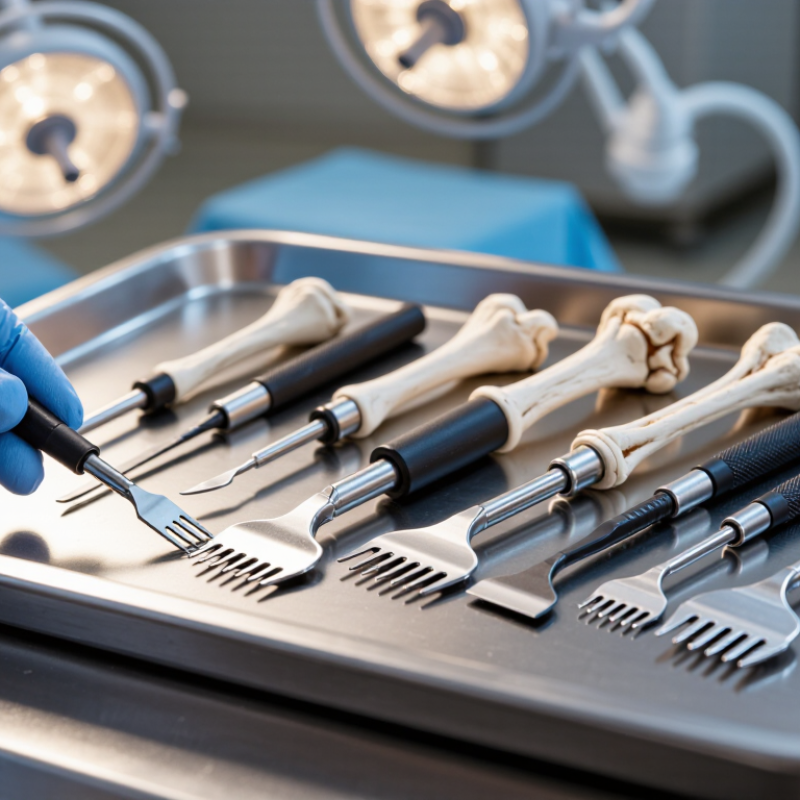
Define the Surgical Purpose and Bone Chisel Type
7 Tips for Buying Orthopedic Bone Chisels
Define the surgical purpose before comparing handles, finishes, or prices. A bone chisel for cortical splitting differs from one for cancellous bone shaping. A narrow, straight pattern offers controlled entry. A wider gouge removes bone with a scooping motion. Curved designs can improve access around joint surfaces. The intended procedure should decide the edge geometry, width, shaft length, and mallet compatibility. Do not treat every “orthopedic chisel” as interchangeable.
Global surgical demand makes selection more than a purchasing detail. A WHO-linked estimate reported 234.2 million major operations annually, with about seven million disabling complications. That figure does not prove a chisel caused harm. It does show why controlled instrumentation matters. For joint reconstruction, review the National Joint Registry’s 2024 report, which tracks millions of hip and knee procedures. Match the instrument to the operative technique, bone density, and access angle. Confirm the manufacturer’s instructions for use, material, sterilization, and inspection.
In practice, I would test balance with a gloved hand. The grip should remain stable without excessive force. Check the cutting edge under magnification. Tiny dents can change bone contact. I once assumed a heavier shaft meant better control; that judgment was incomplete. Excess weight may increase fatigue during repeated impaction. Ask surgeons and sterile-processing staff to review the same sample. Their feedback may expose problems a catalog photo hides. Verify traceability, corrosion resistance, and compatibility with the facility’s sterilization cycle before purchase.
7 Tips for Buying Orthopedic Bone Chisels - Define the Surgical Purpose and Bone Chisel Type
| Tip | Surgical Purpose | Recommended Chisel Type | Key Design Features | Selection Considerations |
|---|---|---|---|---|
| 1. Define the procedure first | Bone cutting, splitting, shaping, or removing a small segment of bone | Select the chisel according to the intended orthopedic procedure | Straight or offset shaft; cutting, gouge, or curved profile | A chisel designed for controlled bone preparation should match the anatomical site and the surgeon’s technique. |
| 2. Match the blade profile to the task | Removing a thin layer, creating a flat cut, or scooping cancellous bone | Flat chisel for planar cuts; gouge chisel for concave removal | Flat cutting edge versus a longitudinally curved, trough-shaped blade | Flat chisels are suited to relatively even cuts, while gouges are intended for channeling or removing contoured bone. |
| 3. Choose the correct width | Fine preparation in a confined area or removal of a wider section | Narrow, medium, or wide blade based on the operative field | Blade width is commonly specified in millimetres | A narrow blade supports localized work; a wider blade can cover more surface but may provide less access in small anatomical spaces. |
| 4. Consider the bone density | Preparation of dense cortical bone or softer cancellous bone | Heavy-duty orthopedic chisel for cortical bone; gouge or lighter profile for cancellous bone | Appropriate shaft strength, edge geometry, and impact compatibility | The instrument should be used only as intended and with compatible surgical technique; excessive impact can damage the edge or instrument. |
| 5. Check access and working length | Work in superficial areas, deep exposure, or anatomically restricted locations | Straight, angled, or offset chisel with a suitable working length | Shaft angle and length selected to improve visualization and access | Longer instruments may improve reach, while angled or offset designs can help avoid obstruction and support a more suitable hand position. |
| 6. Evaluate handle and striking requirements | Manual controlled use or use with a surgical mallet | Hand chisel or mallet-compatible chisel with a suitable striking end | Secure grip, balanced shaft, and a clearly defined impact surface when applicable | Do not strike an instrument unless it is designed for impact. Inspect the striking end and shaft for deformation before use. |
| 7. Verify material, finish, and reprocessing | Repeated use in a sterile surgical environment | Reusable surgical chisel made from corrosion-resistant medical-grade stainless steel, when specified for reuse | Smooth cleanable surfaces, durable cutting edge, and compatibility with validated sterilization procedures | Follow the manufacturer’s cleaning, inspection, maintenance, packaging, and sterilization instructions. Retire instruments showing cracks, corrosion, blunt edges, or other damage. |
Important: Final selection should be made by qualified surgical professionals according to the operative technique, anatomy, instrument instructions for use, and the healthcare facility’s sterilization and quality-control procedures.
FAQS
Match the chisel to the procedure, bone density, and access angle. A narrow straight edge supports controlled entry. A wider gouge removes cancellous bone with a scooping motion.
Curved designs can improve access around joint surfaces or confined areas. They may reduce awkward hand angles. The curve must still provide stable control.
Inspect the edge under bright light or magnification. It should look even and continuous. Avoid chips, dents, rolled sections, and rough grinding marks.
Yes. A thinner blade may improve precision but feel less stable under force. A thicker blade can support impact work. The procedure should decide the balance.
Test the instrument with gloved hands, including wet gloves when permitted. The grip should stay secure without excessive finger pressure. Balance matters. Excess weight may increase fatigue and reduce accuracy.
Request the steel grade, heat-treatment details, hardness range, and test documentation. “Surgical steel” alone is too vague. The body should resist bending, while the edge remains hard.
Confirm the validated cleaning, drying, and sterilization cycle. Inspect for discoloration, cracks, residues, and pitting after repeated processing. Chloride residues and trapped moisture can damage surfaces.
Yes. Surgeons and sterile-processing staff may notice problems hidden by catalog images. Check traceability, striking-end smoothness, and sterilization compatibility. I once assumed heavier meant better control; that judgment was incomplete.
Conclusion
Choosing the right orthopedic bone chisels begins with clearly defining the surgical purpose and selecting a design suited to the procedure, such as a straight, curved, narrow, or broad chisel. Pay close attention to blade geometry, edge sharpness, cutting consistency, and handle ergonomics, since reliable control can support precision and reduce hand fatigue. The chisel should also be manufactured from strong, durable materials that tolerate repeated sterilization and resist corrosion.
Size and shape must match the target bone, access requirements, and amount of force expected during use. Before purchasing, compare manufacturers by examining quality documentation, safety standards, inspection procedures, and product consistency rather than focusing only on the initial price. A complete value assessment should include durability, maintenance needs, sterilization performance, handling comfort, and long-term reliability. Selecting well-designed instruments can help create a more controlled, efficient, and dependable surgical workflow.