Choosing Tungsten carbide surgical scissors requires more than comparing prices or admiring a polished handle. These instruments must perform reliably during delicate cutting, repeated sterilization, and demanding clinical routines. A surgeon may notice the difference when a blade closes smoothly, grips tissue cleanly, and avoids unexpected pulling. Small details matter.
This guide examines the practical factors behind a sound purchasing decision. It considers blade shape, cutting edge design, tungsten carbide inserts, handle balance, locking quality, and available sizes. It also explains how the scissors should match specific procedures, tissue types, and handling preferences. A fine, sharp tip may support precise dissection, while a stronger profile can suit heavier materials. The best choice is not always the most expensive one.
Material claims deserve careful attention. Reliable manufacturers should provide clear specifications, quality-control information, sterilization guidance, and traceable product documentation. Buyers should review the instructions for use rather than relying on catalog language alone. Tungsten carbide surgical scissors can offer durable cutting performance, but their value depends on manufacturing accuracy and proper maintenance. That point is easy to overlook.
Practical inspection remains important. Check the joint, alignment, tension, and edge condition before clinical use. Ask whether servicing or sharpening is available. A familiar instrument may feel safer than a technically superior design that demands adjustment. I would not treat any single feature as decisive. Clinical feedback, verified specifications, and repeated hands-on evaluation should guide the final selection. Even then, preferences may change after real procedures reveal weaknesses that a product sheet never shows.
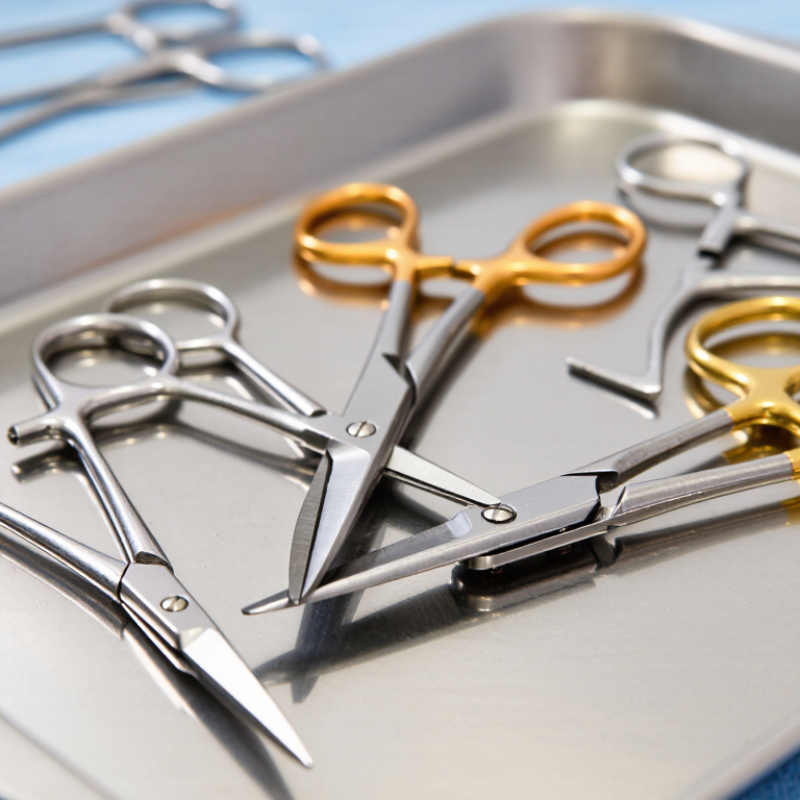
Tungsten carbide surgical scissors are precision instruments designed for controlled cutting in clinical settings. In many models, the blades are stainless steel, while small tungsten carbide inserts are bonded to the cutting edges. These hard inserts help the edges resist wear and stay sharp through repeated use. The exact construction varies by instrument.
Look closely at the blade. The inserts may appear as narrow, contrasting strips near the cutting edges. Their fine, firm bite can help scissors cut dense material with less dragging. That matters during delicate work, where a snag or uneven cut can be frustrating. Not magic, though. Performance also depends on blade alignment, hinge condition, and careful handling.
Tungsten carbide does not make scissors immune to damage. Dropping them, forcing them through unsuitable material, or using poor cleaning practices can affect the instrument. Follow the facility’s validated cleaning and sterilization instructions, and inspect the blades and joint regularly. A smooth opening and closing action is a useful sign, but it is not a complete inspection. The label can be confusing: “tungsten carbide scissors” often describes reinforced cutting edges, not an instrument made entirely from carbide. Check the instrument’s specifications before choosing one for a particular procedure.
How to Choose Tungsten Carbide Surgical Scissors?
Tungsten carbide blades improve surgical cutting through hardness, edge stability, and controlled contact. Compared with conventional steel, carbide inserts can resist wear during repeated procedures. That edge stays sharper for longer. Less force may be needed. The cut feels controlled.
In surgical instrument evaluation, I would inspect the blade junction, handle balance, and closing action. A precise scissors should open smoothly and meet evenly at the tip. Poor alignment can cause tissue dragging, even with a hard blade. Surface finish also matters because rough areas may increase cleaning difficulty. Ask for validated sterilization guidance and documented material specifications. Reliable information should come from testing, not attractive claims.
The intended procedure should guide the choice. Fine, delicate work may require narrow tips and a lighter profile. Heavier tissue may need stronger blades and more leverage. Tungsten carbide is not a cure-all. It can chip if dropped or used against unsuitable materials. Small damage may be difficult to notice under ordinary lighting. Regular inspection under magnification can reveal dull edges, gaps, or uneven closure. Replace instruments when performance changes, rather than waiting for complete failure. There is room for judgment here; surgeon preference, hand size, and operating conditions can affect the final decision.
The intended procedure should guide the scissor design, not the handle’s appearance. Straight scissors offer a direct cutting path and clear visibility. They suit sutures, dressings, and accessible tissue planes. Curved blades follow anatomical contours more naturally. They can improve access during deeper dissection and reduce awkward wrist rotation. The difference becomes noticeable in confined fields.
Blade tips also deserve careful attention. Sharp-sharp tips support precise tissue separation and controlled cutting. Sharp-blunt designs reduce the chance of catching nearby structures with one tip. Fine, narrow blades work well for delicate dissection, but they may feel less forgiving under force. Heavier blades tolerate denser material better. Tungsten carbide inserts can improve edge durability and grip, although they do not replace proper technique or maintenance.
Handle length should match the working depth. Long handles may reach deep cavities, yet they can reduce tactile feedback. Shorter handles usually provide better control near the surface. Ring size and finger position affect fatigue during repeated cuts. A common mistake is choosing one versatile pair for every procedure. No design fits all situations. Procedure trials under realistic lighting and tissue conditions often reveal problems that specifications miss. Sterilization compatibility, hinge smoothness, and cutting alignment should be checked before routine use. A scissor can look precise and still perform poorly when its blades drift or its tips meet unevenly.
Choosing tungsten carbide surgical scissors requires more than checking the cutting edge. Handle comfort affects precision during long procedures. Hold the scissors with gloved hands and test several opening and closing movements. The finger rings should feel smooth, not sharp or restrictive. A balanced instrument should remain steady without forcing the thumb downward. Small details matter.
Control becomes clearer when cutting fine suture, thin tissue models, or layered gauze. The blades should meet evenly from the hinge toward the tip. Watch for pulling, crushing, or a sudden change in resistance. The joint should open smoothly, without side-to-side movement. Too much stiffness can reduce speed. Too little tension may weaken accuracy. Both problems deserve attention.
Durability depends on the carbide inserts, hinge construction, surface finish, and maintenance process. Ask whether the scissors tolerate repeated cleaning and sterilization cycles. Inspect the screw, pivot, and blade alignment after practical testing. I once focused too heavily on sharpness and overlooked hand fatigue after several minutes. That mistake changed my evaluation method. Comfort must survive real use, not just a brief showroom inspection. If possible, compare the instrument with wet gloves and normal clinical grip pressure. A polished finish looks reassuring, but it cannot replace reliable control. Before approval, record user feedback, cutting performance, and any early looseness. Small flaws may become expensive problems.
Tungsten-carbide inserts can resist wear, but they do not make scissors immune to damage. Check the manufacturer’s instructions for use (IFU) before selecting a pair. Confirm approved cleaning agents, sterilization method, temperature limits, and cycle parameters. CDC guidance classifies instruments entering sterile tissue as critical items; they require sterilization before use. The CDC also reports that surgical-site infections affect about 2–5% of patients undergoing inpatient surgery in the United States. Proper reprocessing is one part of reducing preventable risk.
Inspect the IFU for cleaning steps that address the hinge, serrations, and carbide inserts. Dried blood can lodge around the joint, while abrasive brushes may scratch surfaces or loosen inserts. Follow the stated rinse and drying steps, then check alignment, cutting action, and visible damage under good light. Use only validated sterilization cycles compatible with the instrument. CDC’s Guideline for Disinfection and Sterilization in Healthcare Facilities emphasizes following device instructions and monitoring sterilization processes. A rushed inspection is easy to miss.
Tips: Keep scissors open during cleaning if the IFU directs it, and avoid overloading the tray. After each cycle, look for residue, corrosion, loose inserts, or stiff movement. Record maintenance and sterilization checks. Small details matter. If instructions are unclear, ask the facility’s sterile-processing lead or the manufacturer for written clarification.
| Check Before Selection | What to Verify | Why It Matters | Practical Check |
|---|---|---|---|
| Intended procedure and tissue | Confirm that the scissors’ pattern, size, tip shape, and cutting profile suit the intended procedure and tissue. | Instrument geometry affects access, visibility, and control. Tungsten carbide inserts do not make every scissor suitable for every task. | Compare the instrument specifications with the procedure requirements and the facility’s approved instrument list. |
| Tungsten carbide insert condition | Check that the inserts are securely seated and free of chips, cracks, gaps, or visible separation from the blades. | Damaged or loose inserts can impair cutting and may create a risk of debris or further instrument damage. | Inspect both cutting edges under good lighting before use and during reprocessing checks. Remove damaged scissors from service. |
| Cutting performance | Check for smooth, consistent cutting across the intended working portion of the blades, without snagging or excessive force. | Blunt, misaligned, or damaged blades can compromise performance and may harm tissue. | Use the facility’s approved inspection method or test material. Do not test sharpness on fingers or tissue. |
| Joint and alignment | Look for smooth pivot movement, appropriate blade alignment, and no excessive looseness, stiffness, or lateral play. | Joint wear or misalignment can affect control and cutting quality. | Open and close the scissors through their range of motion. Refer instruments with abnormal movement for evaluation. |
| Cleaning instructions | Obtain the instrument’s current instructions for use (IFU), including approved cleaning agents, water quality, cleaning method, and any restrictions. | Cleaning requirements can vary by instrument construction and must be followed to remove soil before sterilization. | Use validated facility procedures and the applicable IFU. Clean promptly after use; do not allow blood or debris to dry on the instrument. |
| Manual or automated cleaning | Verify whether manual cleaning, an automated washer-disinfector, or both are permitted, and whether the joint should be open during cleaning. | Inaccessible soil can remain around the pivot or blades if the specified process is not followed. | Disassemble only if the IFU allows it. Rinse, brush, and process using the specified equipment and cycle; inspect for residual soil afterward. |
| Detergents and chemical compatibility | Check detergent pH and compatibility requirements, as well as restrictions on abrasive products, bleach, and other corrosive chemicals. | Unsuitable chemicals or abrasives can damage instrument surfaces, joints, or carbide inserts. | Use only agents compatible with the IFU and facility process. Rinse thoroughly as directed to avoid chemical residue. |
| Drying and lubrication | Confirm drying requirements and whether a compatible instrument lubricant is recommended for the joint. | Residual moisture can contribute to staining or corrosion on susceptible components; unsuitable lubricants may leave residue or interfere with processing. | Dry thoroughly using the approved method. If lubrication is specified, apply a steam-permeable instrument lubricant as directed. |
| Sterilization method and cycle | Verify the permitted sterilization method, validated cycle parameters, packaging requirements, and any maximum temperature or exposure limits in the IFU. | There is no single cycle that can be assumed suitable for every instrument. Sterilization must be validated for the device and facility process. | Follow the current IFU and facility policy. Do not infer cycle parameters from another instrument or rely on a generic time-and-temperature setting. |
| Loading and packaging | Check instructions for positioning, protection of sharp tips, joint position, and compatibility with the selected sterilization packaging or tray. | Incorrect loading can impede cleaning or sterilant contact and may cause handling damage. | Arrange instruments as directed, protect cutting edges without obstructing processing, and avoid overloading trays. |
| Post-cycle inspection and storage | Confirm that the scissors are clean, dry, intact, and functioning properly before storage or use. | Processing does not replace inspection. Damage or retained soil should be addressed before the instrument is returned to service. | Inspect the inserts, edges, joint, and alignment. Store in a clean, dry, protected area according to facility policy. |
| Service and repair | Check the recommended inspection, sharpening, adjustment, and repair pathway, including whether carbide inserts can be serviced. | Improper sharpening or repair may alter blade geometry, damage inserts, or reduce safe performance. | Use qualified instrument service and follow the manufacturer’s guidance. Do not attempt unauthorized repairs or sharpening. |
Important: Always follow the current instructions for use for the specific instrument and the facility’s validated reprocessing procedures. If instructions are unavailable, or an instrument is damaged or performs abnormally, remove it from service and consult the appropriate clinical engineering, sterile processing, or repair resource.
They are precision scissors with hard carbide inserts bonded to their cutting edges. The main body is often stainless steel. These inserts help resist wear during repeated clinical use. Not entirely carbide.
They help the edge stay sharp for longer. Less force may be needed for dense material. The cut can feel smoother and more controlled. Alignment still matters.
No. Fine work may require narrow tips and a lighter profile. Heavier tissue may need stronger blades and greater leverage. Procedure requirements should guide selection.
Check blade alignment, handle balance, hinge movement, and tip closure. The blades should meet evenly. Look for clear material specifications and cleaning instructions. Attractive claims are not enough.
Yes. A drop can chip inserts or disturb alignment. Rough handling may create small defects that ordinary lighting misses. Inspect under magnification when possible. They are durable, not indestructible.
Review the instrument’s written instructions before use. Confirm approved cleaners, rinsing steps, drying requirements, and hinge access. Dried blood can collect around the joint. Abrasive brushes may scratch surfaces or loosen inserts.
Use only a validated cycle compatible with the instrument. Confirm temperature limits and cycle parameters in the instructions. Instruments entering sterile tissue require sterilization before use. Guessing here is risky.
Look for residue, corrosion, loose inserts, and stiff movement. Confirm smooth opening and closing. Check the cutting edge under good light. A rushed inspection can miss important damage. Recording checks helps, though records alone prove nothing.
Choosing the right Tungsten carbide surgical scissors requires more than comparing blade materials. These instruments use tungsten carbide inserts or edges to provide enhanced hardness, sharpness retention, and precise cutting performance during repeated procedures. When evaluating a pair, consider the intended application first: fine, curved, straight, blunt, or pointed designs each support different cutting and dissection needs. The blade length, tip shape, tension, and cutting profile should match the tissue type and level of control required.
Handle comfort is equally important, especially during lengthy procedures. Ergonomic finger rings, balanced weight, smooth movement, and secure grip can improve control while reducing hand fatigue. Durability should also be assessed through the quality of construction and joint performance. Before purchase, review the manufacturer’s maintenance and sterilization instructions, including cleaning methods, lubrication, inspection, and compatibility with approved sterilization processes. Proper care helps preserve cutting precision, prevent corrosion, and extend the usable life of the scissors.