Surgical needle holders may look similar at first glance, yet small design differences can change control, visibility, and hand comfort. In 2026, common types include Mayo-Hegar, Mathieu, Olsen-Hegar, Crile-Wood, Ryder, and Castroviejo holders. Each has a distinct jaw shape, locking mechanism, or handle profile. Those details matter when a clinician places sutures in different tissues or works within a restricted field.
Mayo-Hegar models are widely recognized for general suturing and sturdy handling. Mathieu holders use a spring-style grip, while Olsen-Hegar designs combine needle holding with integrated scissors. Crile-Wood and Ryder patterns offer narrower jaws for more delicate work. Castroviejo holders are typically associated with fine suturing and delicate control. These are useful distinctions, not rigid rules. Real instrument preferences also depend on needle size, procedure, hand size, and the clinician’s training. Fit is personal.
This guide compares the leading types by design, intended use, and practical trade-offs. It also considers materials such as stainless steel and tungsten carbide inserts, which can affect durability and grip. Small details matter. A locking ratchet that feels secure to one user may feel awkward to another. No single holder is best for every case, and product names alone do not guarantee performance. Selection should reflect clinical requirements, manufacturer specifications, and proper maintenance guidance. The categories are not always perfectly tidy; some designs overlap in everyday use. That is worth remembering when comparing instruments.
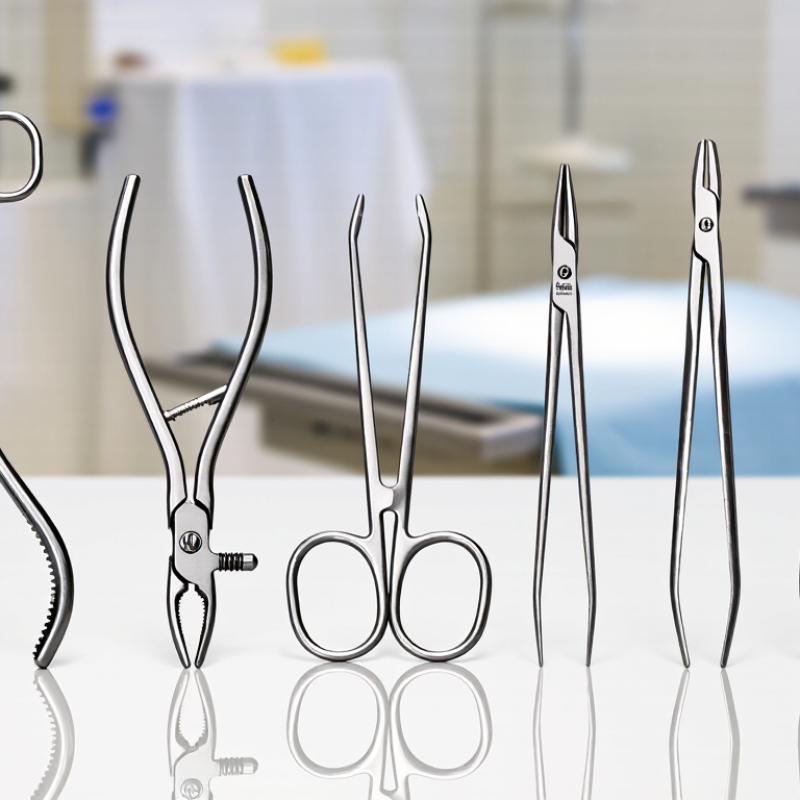
Core Design and Function of Surgical Needle Holders
A surgical needle holder grips a curved needle while the surgeon guides it through tissue. Its core parts are the jaws, hinge, ratchet, and handles. Jaws with crosshatched or tungsten-carbide inserts help resist slipping; the ratchet keeps the instrument closed without constant finger pressure.
A Lancet analysis by Weiser and colleagues estimated 234.2 million major operations worldwide in 2004. That older estimate is not a current count, but it shows the scale of work relying on dependable instruments.
Common designs serve different tasks. Mayo-Hegar holders suit many general procedures, while slimmer Castroviejo models support delicate work and controlled movements. Mathieu holders use a spring handle and one-handed ratchet release. Olsen-Hegar models combine needle holding with scissors, though the extra function may feel awkward when space is tight.
The “best” design depends on needle size, tissue, and operator grip—not just the procedure name.
Small details matter.
Tips: Check jaw alignment under bright light, then test the ratchet with a gloved hand. A needle should sit securely without being crushed. If it rotates or slips, reassess the size and grip; technique and instrument condition both matter. Teams may disagree on preferred handles, and that is worth discussing during setup.
How Surgical Needle Holders Are Classified by Design
What Are the Top Types of Surgical Needle Holders in 2026?
How Surgical Needle Holders Are Classified by Design
Design classification starts with how the instrument is held and locked. Ring-handled, ratcheting holders provide a familiar grip and a set locking position. Spring-handled models, including fine palm-held patterns, open when pressure eases and allow quick adjustments. Jaw design matters too: cross-serrations grip the needle, while narrow jaws suit delicate work. Some models combine a holder with a suture-cutting feature. Useful, but the extra function may not suit every task.
A global estimate published in The Lancet put annual major operations at 234.2 million, using data from 2004 (Weiser et al., 2008). This is historical context, not a current count or a measure of instrument demand. Still, it shows why reliable handling matters across varied procedures. The categories can overlap in practice, and choosing by name alone can miss important differences in grip, jaw profile, and locking feel.
Tips: Test the lock and jaw alignment before use. Match holder size and jaw pattern to the needle and procedure, following facility guidance. A smooth click helps. It is not the whole story. Comfort can change with glove thickness and hand size.
Top Types of Surgical Needle Holders in 2026: Classification by Design
Compare common needle-holder designs by their typical handle and jaw mechanisms. A value of “Yes” indicates a feature commonly associated with that design; construction can vary between models.
Ring-handled designs such as Mayo-Hegar and Olsen-Hegar use a ratchet lock. Olsen-Hegar adds integrated scissors, while Mathieu and Castroviejo designs are distinguished by spring-action handles. Castroviejo holders are commonly used for delicate work.
Top Types of Surgical Needle Holders in 2026
Top Types of Surgical Needle Holders in 2026
In 2026, common surgical needle holders include Mayo-Hegar, Crile-Wood, Olsen-Hegar, Mathieu, and Castroviejo patterns. Mayo-Hegar models suit general suturing, with broad jaws and a ratchet lock. Crile-Wood holders offer slimmer jaws for more delicate work. Olsen-Hegar combines needle holding with scissors, which can save an instrument change but adds bulk. Mathieu’s palm-held grip allows quick locking and release. Castroviejo spring handles support precise control in fine procedures. Small details matter.
Choosing a pattern depends on the needle, suture, and working space. A heavy holder may feel secure in a large incision but awkward near delicate tissue. Grand View Research estimated the global surgical instruments market at USD 20.5 billion in 2023; this broad category includes far more than needle holders. The figure signals a large instrument sector, not a ranking of holder types. No single design fits every case, and handling preferences still vary between clinicians.
Tips: Match jaw size to the needle, and check that the lock closes evenly. Test the grip with gloves before a procedure. Inspect for worn serrations; even a small slip can make needle control frustrating.
How Holder Types Match Procedures and Needle Sizes
Matching a needle holder to a procedure starts with the needle, not the handle. Larger, curved needles used for deeper tissue generally need sturdy jaws, as found on a Mayo-Hegar holder. A finer needle for delicate work calls for narrower, more precise tips; Castroviejo-style holders are commonly used in microsurgery. Crile-Wood holders offer a slimmer profile for fine suturing, while spring-handled designs can support controlled, repeated movements. Fit matters. The jaws should grip the needle securely without crushing it, and the needle should sit at a stable angle. Exact choices depend on tissue, needle curvature, and clinician preference.
Procedure planning matters, too. A WHO-led study across eight hospitals found that complications fell from 11.0% to 7.0% after introducing a surgical safety checklist; mortality fell from 1.5% to 0.8% (Haynes et al., New England Journal of Medicine, 2009). The study did not test needle holders, but it reinforces the value of preparing appropriate instruments before incision. Check that the holder’s working length suits the surgical field and that its jaws match the needle’s size and shape. A tiny needle in broad jaws can feel unstable. A large needle in delicate jaws may strain the instrument. Not a rule. Local protocols and the operating clinician’s assessment should guide the final choice, and size labels alone do not tell the whole story.
Key Factors for Selecting a Surgical Needle Holder
What Are the Top Types of Surgical Needle Holders in 2026?
Key Factors for Selecting a Surgical Needle Holder
Common types include Mayo-Hegar, Olsen-Hegar, Mathieu, and Castroviejo holders. Their jaws, handles, and locking mechanisms suit different procedures and needle sizes. A Mayo-Hegar holder offers a familiar ratchet grip for many general procedures. Olsen-Hegar models combine needle holding with scissors, which can reduce instrument changes. Castroviejo holders are often used for delicate work requiring fine control. There is no perfect holder for every hand.
Match the holder to the needle, tissue, and task. Jaws should grip the needle securely without crushing it. Check the jaw length and surface pattern, then consider the needle’s curvature and size. Handle comfort matters during repeated, precise movements. A heavy instrument may tire the hand; a very light one may feel less stable. Sterilization compatibility, joint condition, and reliable locking action also deserve attention. An overlooked detail: test the grip with the gloves used in practice.
Tips: Hold the instrument as you would during a procedure. Confirm that the needle does not rotate or slip with gentle pressure. Ask trained colleagues to compare control and comfort. Small differences can matter. Reassess the choice when the procedure or needle changes.
What Are the Top Types of Surgical Needle Holders in 2026? - Key Factors for Selecting a Surgical Needle Holder
| Needle Holder Type |
Typical Design |
Common Applications |
Key Selection Considerations |
| Mayo-Hegar |
General-purpose, ring-handled instrument with a ratchet lock and relatively robust jaws. |
Routine suturing in general surgery and other procedures that use medium or larger needles. |
Consider when a durable, versatile holder is needed. Match jaw size and grip surface to the needle; it may be too bulky for very fine work or restricted access. |
| Crile-Wood |
Ring-handled, ratcheted design with a narrower, more delicate profile than many general-purpose holders. |
Fine suturing where controlled handling of smaller needles is useful. |
Choose a jaw profile suited to the needle and tissue. Its narrower design can improve access but may be less suitable for large needles or heavy loads. |
| Olsen-Hegar |
Combines a ratcheted needle holder with scissors blades near the hinge. |
Procedures where the operator may benefit from holding a needle and cutting suture with one instrument. |
Check that the scissors function is appropriate for the intended suture and workflow. The combined design can reduce instrument changes, but adds features that may not be needed for every task. |
| Mathieu |
Spring-action handle, commonly with a locking mechanism; operated by compressing the handles rather than using finger rings. |
Suturing tasks in which a palm-style grip is preferred, including some dental and general surgical settings. |
Assess handle comfort, locking action, and release control. The grip style is a matter of operator preference and may feel unfamiliar to users accustomed to ring handles. |
| Castroviejo |
Fine, spring-handled instrument designed for precise control; commonly available in straight or curved patterns. |
Microsurgery and other delicate procedures using small needles and fine sutures. |
Prioritize precision, tip alignment, and an appropriate jaw surface. Its delicate construction is generally not intended for large needles or forceful handling. |
| Ryder |
Fine ring-handled holder, typically with a slender jaw profile for small-needle control. |
Fine suturing where a ring-handled instrument is preferred over a spring-handled micro holder. |
Compare the jaw length and width with the needle being used. A fine profile can aid precision but may be unsuitable for larger needles or heavier gripping demands. |
Selection checklist: Match the holder to needle size and shape, suture task, access and visibility, jaw grip, handle comfort, and the user’s preferred locking mechanism. Confirm that the instrument is intended for the applicable sterilization and reprocessing protocol. Designs and specifications can vary by manufacturer.
Conclusion
Surgical needle holders are precision instruments designed to grasp, guide, and control a needle during suturing. Their jaws, handles, and locking mechanisms determine how securely they hold a needle and how much control they offer. Holders can be classified by features such as jaw shape, handle style, locking design, and whether the instrument includes scissors. In 2026, commonly used types include standard ratcheted holders, delicate micro needle holders, fine-tipped models, and combination needle holder-scissors.
Choosing a holder depends on the procedure, the size and shape of the needle, and the material being sutured. Fine needles and delicate work generally call for smaller jaws and precise control, while larger needles may require a sturdier grip. Consider jaw texture, instrument length, balance, hand comfort, visibility, and the need for a locking mechanism. Matching these factors to the task can improve handling, support consistent suturing, and help reduce needle slippage or instrument strain.
