Featured Medical & Surgical Instrument Sets
Engineered from German-grade martensitic stainless steel and premium medical titanium, manufactured under strict ISO 13485 & CE MDR regulatory protocols.
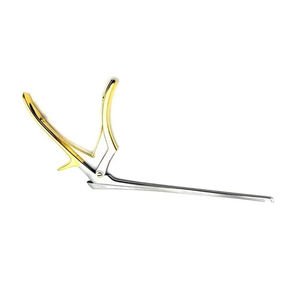
Top Quality Manual Class I Orthopedic Set Kerrison Rongeurs Surgical Instruments
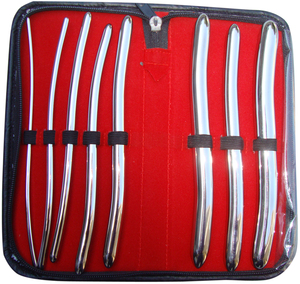
8 Pcs Hegar Dilator Set Kit Uterine Urethral Diagnostic Surgical Cervical Sounds

19-Piece Premium German Stainless Steel Cutlery Kitchen Knife Set With Wooden Block
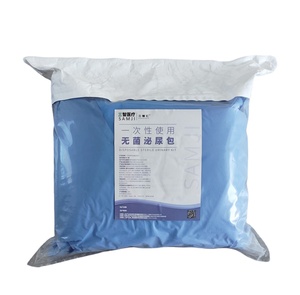
Customizable Patient Use Extremity Surgical Operating Kit Premium Quality Surgical Pack
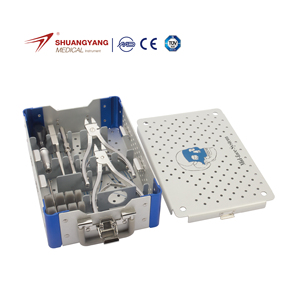
Shuangyang OEM & ODM Maxillofacial Instruments Kit For Facial & Craniofacial Surgery
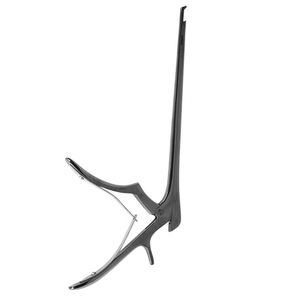
Manual Kerrison Rongeur Kit for Neurosurgery Spine Stainless Steel Surgical Instrument
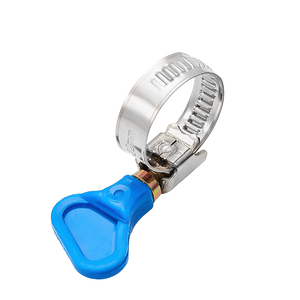
Manufacturer German Type Stainless Steel Hose Clamp with Plastic Handle
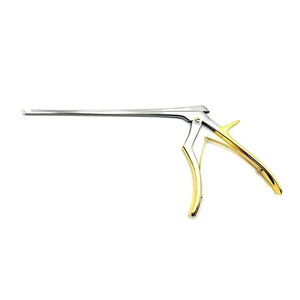
High Quality Stainless Steel Kerrison Rongeurs Set for Neurosurgery & Spine Surgery
Engineering Standards for CE Certified Orthopedic Implants & Sets
An in-depth metallurgical, regulatory, and supply chain analysis for institutional hospital buyers, OEM brands, and medical device importers.
50-Year Heritage of Sialkot Precision
Founded in 1976 in Sialkot, Pakistan—the globally recognized epicenter of medical hand instrument metallurgy—Suddle Group / Entek Medical operates as a vertically integrated manufacturer. Controlling every stage from hot-die drop forging to CNC milling, vacuum heat treatment, and manual fitting, our production lines support the stringent requirements of healthcare facilities worldwide.
- Forged from certified German AISI 420 / 440 martensitic steel
- In-house metallurgical lab testing for grain alignment & hardness
- Direct oversight of over 1,500 skilled orthopedic artisans
CE MDR (EU 2017/745) & FDA Registration
Navigating global regulatory shifts requires absolute traceability. Our manufacturing plant operates under ISO 13485:2016 and ISO 9001:2015 Quality Management Systems. Products carry CE marking under European Medical Device Regulation (MDR) and maintain FDA Establishment Registration (US) for seamless cross-border customs clearance.
- Complete Technical Documentation Files (TDF) for Class I, IIa & IIb
- Unique Device Identification (UDI-DI / UDI-PI) laser marking
- Biocompatibility tested under ISO 10993 parameters
Turnkey OEM & Private Label Sourcing
We empower international brands and medical distributors to expand their clinical catalogs. From custom-engraved box locks and specialized jaw serrations to custom modular sterilization trays, our engineering department transforms customer CAD drawings into clinical-grade realities.
- Flexible MOQs starting at 50 units for catalog lines
- Fast prototyping cycles (2-3 weeks from drawing sign-off)
- Custom laser etching, branding, and sterile packaging assembly
Metallurgical Matrix & Implant Material Selection
Selecting the optimal alloy composition is critical to clinical longevity, fatigue resistance, and sterilization cycle tolerance in orthopedic trauma and spinal surgery.
| Material Classification | Standard Specification | Hardness Range (HRC) | Clinical Applications | Key Performance Metrics |
|---|---|---|---|---|
| AISI 420 Stainless Steel | ASTM F899 / DIN 1.4021 | 48 – 52 HRC | Tissue forceps, bone hold forceps, retractors | High spring tension, excellent ductility, superior corrosion resistance post-passivation. |
| AISI 440C High-Carbon Steel | ASTM F899 / DIN 1.4125 | 54 – 58 HRC | Kerrison Rongeurs, osteotomes, bone chisels | Extreme wear resistance, razor-sharp edge retention during bone resection. |
| Titanium Alloy (Ti-6Al-4V ELI) | ASTM F136 / ISO 5832-3 | N/A (Tensile >860 MPa) | Orthopedic trauma plates, pedicle screws, spinal rods | Biocompatible, low elastic modulus matching human bone, MRI/CT artifact free. |
| Tungsten Carbide (TC) Inserts | WC/Co Composite | 70 – 75 HRC equivalent | Needle holder jaws, wire cutters, precision shears | Gold-ring handles, extreme grip density, 5x longer operational life than standard steel. |
| PEEK (Polyetheretherketone) | ASTM F2026 | Flexural 160 MPa | Interbody spinal cages, radiolucent trial sizers | Radiolucent, elastic modulus close to cortical bone, repeatable autoclave tolerance. |
Passivation & Surface Passivation Technology (ASTM A967 & ISO 15883)
All surgical tools and orthopedic set components undergo automated multi-stage ultrasonic cleaning, acid citric/nitric passivation, and deionized water rinsing. This process strips free iron particles from outer surface layers, forming a chromium-oxide protective passive layer that prevents pitting, staining, and corrosion during repetitive high-temperature steam sterilization (134°C autoclaving).
Request Technical Data Sheet (TDS)Future Procurement Trends in Orthopedic Set Sourcing
Key strategic shifts transforming global orthopedic supply chains, hospital purchasing behaviors, and OEM factory partnerships over the next decade.
1. Shift to Single-Use Procedure-Specific Kits
Hospitals are increasingly adopting pre-sterilized, single-use procedure kits for extremity trauma and spinal fixation to reduce hospital-acquired infection (HAI) risks, avoid central sterile supply department (CSSD) bottlenecks, and streamline operating room setup times.
2. Direct-from-Factory OEM Integration
To mitigate rising distributor markups and supply chain vulnerabilities exposed by global events, Tier-1 medical device buyers are bypassing intermediary traders. They are building direct OEM partnerships with verified manufacturers offering comprehensive technical documentation and regulatory support.
3. Additive Manufacturing & PSI Integration
The convergence of standard orthopedic instrument sets with Patient-Specific Implants (PSI) created via 3D titanium printing (SLS/EBM) requires instrument manufacturers to produce hybrid kits that seamlessly interface with patient-matched anatomical guides.
4. Value-Based Healthcare & Total Cost Sourcing
Procurement committees look beyond initial purchase price. Sourcing metrics now weigh overall instrument lifespan, cost per procedure, warranty coverage, and local refurbishing capability—favoring high-grade German steel construction over low-cost disposable alternatives.
Advancements in Orthopedic Instrument Manufacturing Technology
How state-of-the-art engineering practices enhance structural integrity, dimensional accuracy, and surgical precision.
5-Axis CNC Micro-Milling
Eliminating variance associated with traditional hand forging, multi-axis CNC machines cut complex orthopedic joint angles, Kerrison box locks, and bone chisel bevels to micron-level tolerances (+/- 0.01mm), delivering identical tactile feedback for surgeons across every batch.
PVD & DLC Surface Coatings
Physical Vapor Deposition (PVD) Titanium Nitride (TiN) gold coatings and Diamond-Like Carbon (DLC) black coatings increase surface hardness to over 2,000 HV. These advanced coatings reduce light glare under operating room lamps and lower friction coefficient on sliding shaft components.
Automated Laser UDI Marking
Compliant with global FDA and EU MDR tracking regulations, high-precision fiber laser markers apply deep, permanent UDI-DI 2D DataMatrix codes, catalog numbers, and lot numbers directly to instruments without compromising passive surface layers.
Frequently Asked Questions for Sourcing Managers
Answers to common questions regarding regulatory compliance, manufacturing lead times, quality audits, and OEM customization.
Partner with a Certified Orthopedic Set Manufacturer
Eliminate supply chain risk, secure competitive factory-direct pricing, and expand your medical device catalog with high-precision CE certified surgical tools.