Explore our certified hospital-grade surgical instruments, reusable stainless steel operating sets, and custom OEM procedure kits engineered for global medical distributors and surgical centers.
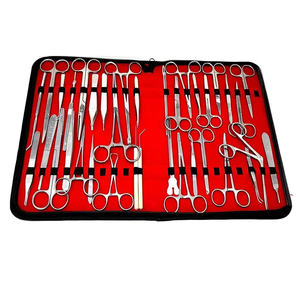
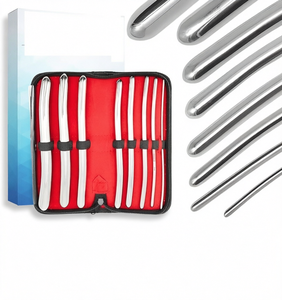
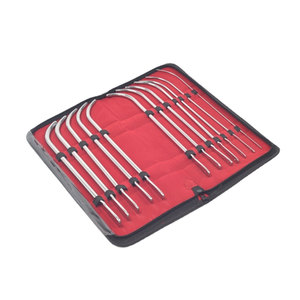
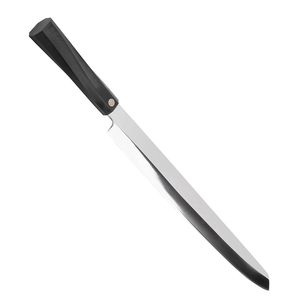
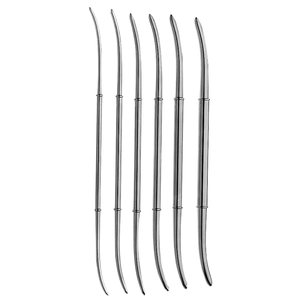
In modern clinical operative environments—spanning microsurgery, plastic and reconstructive procedures, cardiothoracic operations, and neurosurgery—the tactical integrity of surgical dissecting forceps directly impacts surgical efficiency, tissue trauma indices, and patient outcomes. As leading China surgical dissecting forceps manufacturers and global exporters, our manufacturing facility operates at the intersection of traditional forging mastery and advanced CNC precision machining. Dissecting forceps (thumb forceps or tissue forceps) are non-locking handheld surgical instruments designed to grasp, manipulate, isolate, and hold delicate anatomical structures during meticulous operative tasks.
Global procurement directors, medical device distributors, and hospital supply chain managers face increasing scrutiny under updated regulatory frameworks such as EU MDR (EU 2017/745), US FDA 21 CFR Part 820, and ISO 13485:2016 standards. This comprehensive technical guide provides full transparency into the design parameters, metallurgical criteria, manufacturing workflows, and sourcing methodologies required to acquire world-class surgical instruments from certified OEM suppliers.
Precision dissection requires varied jaw geometries, tooth profiles, and handle ergonomics depending on target tissue characteristics (e.g., vascular endothelium, dense fascia, delicate neural tissue, or dermal layers). Below is an engineering overview of standard surgical dissecting forceps categories manufactured for export:
Adson Tissue & Dressing Forceps
Features a wide, flat thumb grip for tactile control. Available in 1x2 teeth (Adson Tissue) for skin closure and secure dermal handling, or fine serrated jaws (Adson Dressing) for atraumatic swab and dressing placement.
DeBakey Atraumatic Dissecting Forceps
Engineered specifically for cardiovascular and vascular tissue manipulation. Features fine, interlocking micro-longitudinal serrations (1x2 parallel rows) that distribute gripping pressure evenly without puncturing vascular walls.
Gerald Micro-Dissecting Forceps
Slim, elongated shaft designed for deep-cavity microsurgery, neurosurgery, and vascular anastomosis. Available in straight or curved tips, with smooth, serrated, or 1x2 tooth tips down to 0.7mm tip width.
The longevity and performance of surgical dissecting forceps rely heavily on material selection and heat treatment technology. Raw stainless steel must balance high tensile spring action with supreme corrosion resistance to withstand enzymatic cleaners, saline exposure, and high-temperature steam sterilization (autoclaving).
| Material Specification | DIN Standard / AISI Grade | Rockwell Hardness (HRC) | Primary Application / Features |
|---|---|---|---|
| Martensitic Stainless Steel | AISI 420A / 1.4021 | 42 - 48 HRC | Standard thumb forceps handles & body shaft; provides optimum spring memory. |
| High-Hardness Martensitic | AISI 420B/C / 1.4028 | 50 - 54 HRC | Precision tips & 1x2 teeth; resists wear, dulling, and mechanical distortion under load. |
| Tungsten Carbide (TC) Inserts | Sintered WC/Co Matrix | 70 - 75 HRC | Gold-handle series; micro-pyramid tip inserts offering 5x resistance against wear. |
| Surgical Titanium Alloy | Ti-6Al-4V (Grade 5) | 36 - 40 HRC | Non-magnetic, ultra-lightweight microsurgical forceps; 100% MRI compatible. |
Raw machined stainless steel retains free iron particles on its surface, which can cause micro-pitting and rust stains after initial sterilization. Our advanced passivation process complies with ASTM F1089 and ASTM A967 standards:
- Ultrasonic Degreasing: Removes all residual machining oils, polishing compounds, and particulate contamination.
- Citric / Nitric Acid Baths: Removes surface free-iron while selectively enriching chromium content at the boundary layer.
- Passive Oxide Layer Formation: Generates a continuous, self-healing Chromium Oxide ($\text{Cr}_2\text{O}_3$) passivation layer measuring 2-5 nanometers thick.
- Boiling Water & Copper Sulfate Testing: Verifies complete passivation integrity, guaranteeing zero rust formation during clinical service.
The global surgical instrument marketplace is undergoing a structural transformation driven by supply chain resilience strategies, digital traceability requirements, and rising standards in infection control. B2B procurement teams must adapt to the following major industry trends:
1. Direct-to-Factory OEM Sourcing & Supply Chain Transparency
Hospitals and large distributors are increasingly bypassing intermediary trading companies to partner directly with audited manufacturing facilities in China. Direct factory sourcing lowers unit cost by 25-40% while granting buyers direct oversight over raw material certificates, batch production records, and customized laser marking.
2. UDI (Unique Device Identification) & Laser Marking
Regulatory mandates by the US FDA and EU Commission require mandatory UDI GS1 DataMatrix 2D barcodes laser-etched directly onto reusable instruments. This enables automated CSSD (Central Sterile Supply Department) tracking, usage cycle counting, and instant recall management.
3. Shift Toward Ergonomic & Non-Reflective Matte Finish
Surgeons operating under high-intensity LED surgical lights and operating microscopes demand glare-free instruments. Procurement is shifting rapidly from mirror polish to electro-polished satin finish and matte-black Ceramic/PVD (Physical Vapor Deposition) coatings for reduced eye fatigue during prolonged surgeries.
4. Sustainable Manufacturing & Single-Use vs. Reusable Dynamics
While single-use surgical packs remain prevalent in outpatient clinics, environmental sustainability initiatives across European and North American healthcare systems are driving renewed demand for high-durability, fully reusable stainless steel dissecting forceps capable of 1,000+ autoclave cycles.
Modern surgical dissecting forceps are no longer static hand tools; they are highly engineered mechanical instruments produced via advanced computer-aided manufacturing technologies:
5-Axis CNC Wire EDM Cut Tips
Eliminates hand-filing variance. Tooth profiles on 1x2 tissue forceps are cut using wire Electrical Discharge Machining (EDM) to micro-tolerances ($\pm 0.005\text{mm}$), ensuring exact mechanical interlock without slippage.
Tungsten Carbide Vacuum Bonding
High-vacuum silver-gold brazing connects tungsten carbide jaw plates to stainless steel shanks, preventing thermal expansion stress fractures during repeated autoclaving.
Ergonomic Tactile Spring Calibration
Electronic force-displacement calibration ensures uniform closing tension ($1.8\text{N} \pm 0.2\text{N}$), drastically reducing surgeon hand fatigue during microsurgical procedures.
Established in 1976, our manufacturing group combines five decades of heritage with state-of-the-art medical production infrastructure. Operating from our fully integrated manufacturing center with over 1,500 skilled craftsmen, engineers, and quality specialists, we provide robust turnkey solutions for international medical brands and hospital contract buyers.
End-to-End Vertical Manufacturing
We control 100% of the manufacturing chain under one roof: die forging, CNC milling, vacuum heat treatment, hand fitting, passivation, laser etching, and cleanroom packaging. This guarantees consistent batch-to-batch quality and strict delivery schedule adherence.
Complete Regulatory Compliance & Certification
Our facilities hold ISO 13485:2016 and ISO 9001:2015 Quality Management System certifications. Our products carry full CE Marking under EU MDR guidelines and are backed by active US FDA Establishment Registration, ensuring seamless customs clearance globally.
OEM & Private Label Customization
We offer comprehensive OEM services including custom tip designs, prototype development from customer blueprints, private label laser etching, custom procedure tray setup, and specialized retail or hospital packaging.
Global Sales & Logistics Infrastructure
With dedicated regional sales and support teams in the United Kingdom, Canada, Saudi Arabia, and China, we serve clients in over 30 countries with rapid response times, local market documentation support, and flexible shipping channels (Air Courier, Sea Freight, Door-to-Door DDP).
Essential answers to common questions asked by hospital purchasing managers, medical device importers, and OEM contract buyers:
Partner with China’s Premier Surgical Instrument Manufacturer
Contact our technical sales team today to request high-resolution product catalogs, competitive factory direct price quotations, or sample evaluations for your hospital or distribution business.