Featured Medical Instruments & Specialized Tray Systems
Direct factory supply of certified surgical hand tools, orthopedic sets, and sterilization tray solutions
Executive Summary: The Evolving Landscape of Surgical Instrument Tray Sourcing
Strategic analysis for Central Sterile Supply Departments (CSSD), hospital buyers, and OEM distributors
In modern healthcare management, surgical instrument trays and sterilization container systems form the backbone of sterile processing workflows. No longer viewed as static storage boxes, advanced surgical instrument trays are engineered critical components designed to protect delicate micro-instruments, optimize steam penetration during autoclaving, ensure microbial barrier integrity per ISO 11607 standards, and maintain strict inventory organization across high-turnover Operating Rooms (OR).
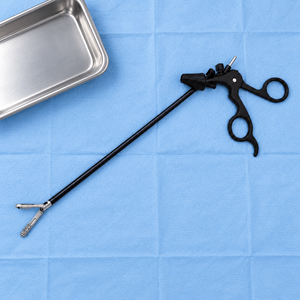
As surgical techniques shift toward Minimally Invasive Surgery (MIS), Unilateral Biportal Endoscopy (UBE), and specialized micro-orthopedics, hospital procurement teams face severe challenges. Off-the-shelf universal trays often fail to secure ultra-fine instruments—such as Kerrison rongeurs, 3mm atraumatic laparoscopic graspers, and micro-scissors—leading to tool misalignment, tip chipping, and premature mechanical wear. Leading Chinese manufacturers are driving industry innovation through customized modular silicone fixtures, deep-drawn wire mesh technology, and rapid prototype turnarounds for customized procedure trays.
Engineering Standards & Material Metallurgy
Dissecting structural specifications, surface passivation, and steam flow dynamics
Austenitic AISI 316L Stainless Steel
Utilized for high-stress wire mesh baskets and load-bearing tray frames. Low carbon content combined with elevated molybdenum (2-3%) provides superior resistance to pitting and crevice corrosion under high-temperature steam sterilization (134°C autoclaving cycles).
DIN 58952 Modular Conformity
Engineered according to standardized DIN dimensions (1/1, 1/2, 1/4 DIN standard units). Fits perfectly into automated washer-disinfectors, transport carts, and sterile storage racks across global hospital networks.
Automated Electropolishing & ASTM A967
Advanced chemical passivation removes free iron from surface layers, creating a continuous chromium-oxide barrier. Smooth electropolished surfaces eliminate micro-burrs and prevent biofilm accumulation during cleaning cycles.
Comparative Material Specification Matrix for Surgical Trays
| Tray Component Standard | Material Grade / Composition | Autoclave Life Expectancy | Corrosion Resistance | Primary Clinical Application |
|---|---|---|---|---|
| Heavy-Duty Wire Baskets | AISI 316L Stainless Steel | > 5,000 Cycles | Ultra-High (Molybdenum Enhanced) | General Surgical Instrument Sets & CSSD Washing |
| Perforated Sterilization Trays | Anodized Aluminum Alloy (5052-H32) | 2,500 - 3,500 Cycles | High (Anodized Surface Layer) | Orthopedic Power Tool Sets, Lightweight Travel Trays |
| Rigid Container Lids | Medical Grade PPSU (Radel) | > 3,000 Cycles | High (Chemical & Acid Resistant) | Endoscopic & Laparoscopic Precision Instruments |
| Soft-Touch Fixation Inserts | Medical Liquid Silicone Rubber (LSR) | 1,500 - 2,000 Cycles | Hydrolytic Stable | Fine Micro-Forceps, Spine Rongeurs, Eye Instruments |
Factory Expertise & Enterprise Competitive Advantages
Why international healthcare supply brands partner with leading Chinese OEMs
Full In-House Manufacturing Chain
From high-speed CNC punching, automated laser cutting, robotic seam welding, to multi-stage passivation and class 100,000 cleanroom packaging. Zero reliance on third-party sub-contractors guarantees 100% batch-to-batch quality control.
Regulatory Compliance & Certifications
Our production facilities operate strictly under ISO 13485:2016 and ISO 9001 quality management systems. Products carry full CE marking under EU MDR 2017/745 standards and are registered with the US FDA for global distribution.
OEM Customization & Rapid Prototyping
Supported by 3D CAD modeling and rapid laser-cutting setups, we transform custom procedure requirements into functional prototype trays within 7 working days, accommodating laser etching of logos, custom color-coding, and custom silicone layout profiles.
Future Industry Trends: Surgical Tray Innovations (2025–2030)
Market direction, technological breakthroughs, and future-proof procurement strategies
1. Integration of Smart RFID & UDI Tracking
Regulatory mandates like the FDA Unique Device Identification (UDI) and EU MDR rules require complete traceability of reusable surgical sets. Next-generation tray systems feature embedded high-temperature RFID tags and laser-matrix data codes. This enables automated CSSD inventory tracking, counting cycles, monitoring autoclave exposures, and eliminating missing tool errors in the OR.
2. Specialized Trays for Advanced Endoscopic Procedures
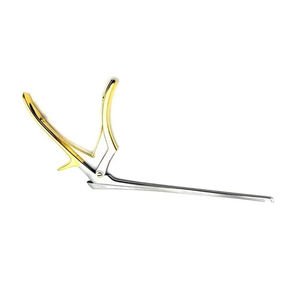
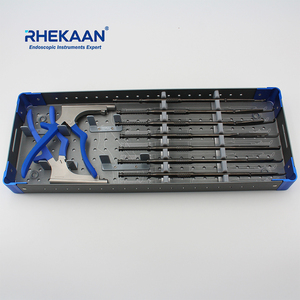
With the rapid growth of Unilateral Biportal Endoscopy (UBE) spine surgery and minimal-access veterinary procedures, traditional generic trays are proving inadequate. Market demand is shifting decisively toward specialty procedure kits that house extended-reach instruments (e.g., 3mm laparoscopic graspers, UBE black-gold Kerrison rongeurs) securely in form-fitting silicone brackets.
3. Lightweight Hybrid PPSU-Alloy Architecture
To reduce physical strain on hospital central sterile personnel, tray engineering is moving away from heavy, solid stainless-steel boxes toward hybrid construction: rigid Radel PPSU transparent lids combined with high-flow perforated aluminum or wire-mesh bases. This design achieves up to 40% weight reduction while accelerating steam drying times.
4. Eco-Friendly & Closed-Loop Sterilization Packaging
Hospitals worldwide are actively looking to eliminate single-use blue wrap paper, which generates metric tons of clinical waste. Reusable rigid container tray systems with permanent PTFE microbial filters provide a closed-loop, sustainable solution that delivers proven ROI within 12 to 18 months of implementation.
Frequently Asked Questions (FAQ) for Sourcing Managers
Direct answers regarding MOQ, quality verification, customization, and international shipping
What primary material grades are used in your surgical instrument trays?
We primarily utilize high-grade German AISI 316L stainless steel for wire mesh baskets and heavy-duty structural frames, anodized 5052 aluminum alloy for lightweight perforated trays, and medical-grade transparent PPSU (Radel) for container lids. All silicone holders are molded from bio-compatible liquid silicone rubber (LSR).
How do you ensure passivation quality and rust prevention on stainless steel items?
Every production batch undergoes automated electropolishing and citric/nitric acid passivation per ASTM A967 standards. We perform rigorous boil tests, salt spray testing (per ASTM B117), and copper sulfate testing to verify that all free iron is eliminated and a durable passive oxide layer is established.
Are your sterilization trays compatible with standard DIN wash baskets and autoclaves?
Yes. Our surgical trays are built in full compliance with DIN 58952 and ISO 11607 international dimensions. They fit seamlessly into standard European and American washer-disinfectors, steam autoclaves, hydrogen peroxide plasma sterilizers, and sterile storage shelving systems.
What is the Minimum Order Quantity (MOQ) for custom OEM tray designs?
For standard catalog items, our baseline MOQ starts at 50 units. For custom OEM tray development (including bespoke laser-cut silicone layouts, custom dimensions, and branded laser engraving), the initial order quantity typically ranges between 100 to 200 units depending on tool manufacturing requirements.
What certifications and technical documentation do you provide for hospital tenders?
We supply complete tender documentation packages including ISO 13485:2016 certificates, ISO 9001 compliance proof, CE Certificates under EU MDR, US FDA registration numbers, Raw Material Mill Certificates (EN 10204 3.1), and Steam Sterilization Validation Reports.
What is the typical production lead time for bulk export shipments?
Standard catalog orders are dispatched within 2 to 3 weeks. Custom OEM projects require 1 to 2 weeks for initial prototype approval followed by 4 to 6 weeks for full production run, depending on final volume and shipping arrangements (Express Air Cargo, Sea Freight, or Door-to-Door DDP).
Partner with China's Premier Surgical Instrument & Tray Manufacturer
Streamline your medical device supply chain today. Connect with our engineering sales team to request full product catalogs, pricing schedules, sample evaluations, or technical drawing consultation.