Direct Factory Recommended Surgical Kits & Instrument Sets
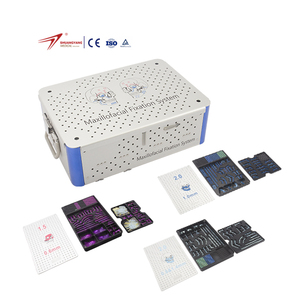
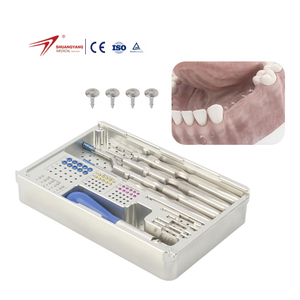
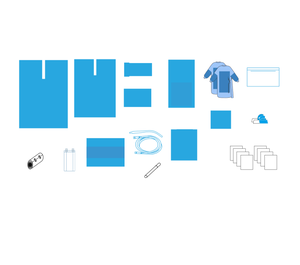
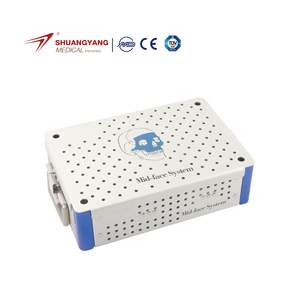
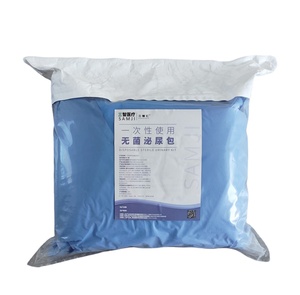
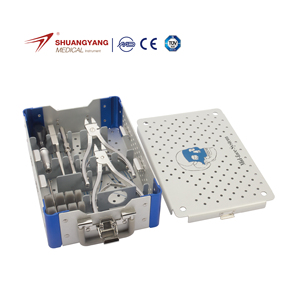
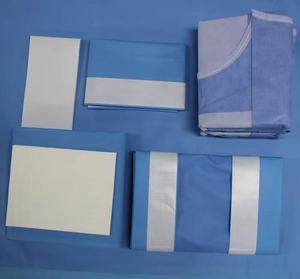
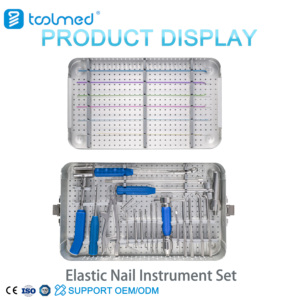
As a leading OEM/ODM medical manufacturing network, our specialized China wholesale custom surgical kits factories provide sterile, high-precision procedural packs designed for orthopedic, maxillofacial, laparoscopy, and general surgical interventions. Explore our core standard and customized product lines engineered to meet international clinical standards:
Executive Industry Analysis: Sourcing Custom Surgical Kits from China
The global healthcare procurement landscape has undergone a paradigm shift. Modern operating theaters (OR), ambulatory surgical centers (ASCs), and international hospital groups are rapidly moving away from individual component purchasing toward procedure-specific custom surgical kits. Sourcing directly from premier China wholesale custom surgical kits factories offers global medical device brand owners, distributors, and procurement teams an unmatched balance of manufacturing precision, material integrity, scale flexibility, and cost containment.
Historically, surgical kit manufacturing was heavily fragmented, forcing hospital procurement agents to combine drapes, stainless steel instruments, specialized implants, and disposable consumables from separate regional vendors. Today, China’s advanced medical manufacturing clusters integrate complete upstream and downstream capabilities—ranging from German-standard martensitic stainless steel forging (AISI 420/440 grade) and precision CNC titanium machining to Class 100,000 cleanroom assembly and validated Ethylene Oxide (EO) sterilization.
To maintain competitive advantages in high-stakes tender processes, procurement directors must evaluate potential OEM factories using a comprehensive E-E-A-T (Experience, Expertise, Authoritativeness, and Trustworthiness) framework. This whitepaper serves as a technical blueprint, detailing structural shifts in global procurement, technological advancements in kit manufacturing, quality verification protocols, and key strategic steps to execute risk-free wholesale orders.
Strategic Future Procurement Trends for Surgical Kits (2025–2030)
As surgical methodologies shift toward minimally invasive procedures and robotics-assisted interventions, the requirements for custom surgical packs have evolved beyond mere convenience. Strategic buyers must align their supply chain practices with four macro trends defining the next decade of surgical kit manufacturing:
1. Procedure-Specific Standardization & Waste Reduction
Modern hospital cost-accounting models penalize unused components inside surgical packs. OEM factories in China are now co-developing custom kit configurations with clinical personnel. By tailoring every drape, suture, scalpel blade, and retractor specifically to procedure protocols (e.g., total hip arthroplasty vs. maxillofacial trauma repair), healthcare facilities achieve up to a 35% reduction in medical waste and shorten OR setup time by 15 to 20 minutes per operation.
2. Deep Regulatory Convergence (EU MDR & US FDA UDI)
Regulatory barriers are tightening globally. The transition to EU MDR (2017/745) and strict US FDA Unique Device Identification (UDI) mandates require every custom surgical pack manufacturer to maintain complete technical documentation, post-market surveillance (PMS), and full material traceability down to the raw ingot batch. Top-tier China factories now provide fully compiled Technical Files, simplified registration dossiers, and pre-assigned GS1 Datamatrix codes directly on secondary kit packaging.
3. Smart Packaging & RFID Sterile Barrier Monitoring
Integrity of the sterile barrier is non-negotiable. Advanced China factories are integrating smart indicator systems, high-barrier Tyvek® heat-seal pouches, and RFID tracking micro-chips into wholesale custom surgical kits. This enables hospital inventory managers to track shelf-life, verify EO sterilization parameters via digital audit trails, and automate supply-chain replenishment without opening sterile outer boxes.
Technological Advancements in Surgical Kit Manufacturing
Manufacturing surgical kits is no longer a simple labor-intensive assembly operation. It has evolved into an advanced bio-engineering discipline integrating metallurgy, polymers, cleanroom micro-assembly, and automated quality control. Understanding these technical dynamics allows buyers to identify authentic manufacturers from basic trading intermediaries:
Metallurgical Metallurgy & Material Selection Benchmarks
For reusable or single-use precision surgical hand instruments within custom kits (such as Mayo scissors, hemostatic forceps, bone chisels, and maxillofacial plate systems), material integrity determines tool performance and longevity. Premium China surgical kit factories employ strict metallurgical grade standards matching international DIN / ISO requirements:
| Material Standard | Target Chemical Composition | Hardness (HRC) | Primary Clinical Application |
|---|---|---|---|
| AISI 420J2 (Martensitic) | Cr 12.0-14.0%, C 0.26-0.35% | HRC 48 - 52 | Hemostatic forceps, tissue retractors, needle holders, general kit tools. |
| AISI 440C (High-Carbon) | Cr 16.0-18.0%, C 0.95-1.20% | HRC 54 - 58 | Precision surgical scissors, bone rongeurs, orthopedic chisels requiring extreme edge sharpness. |
| Titanium Alloy (Ti6Al4V) | Al 5.5-6.75%, V 3.5-4.5%, Ti Balance | HV 330 - 390 | Maxillofacial fracture fixation plates, micro-neurosurgical sets, MRI-compatible kits. |
| Medical Polypropylene (PP/SMS) | Non-woven SMS/SMMS Multi-layer | N/A (Hydrostatic > 50cm H2O) | Impermeable surgical drapes, extremity packs, laparotomy packs with fluid collection pouches. |
Cleanroom Automation & Ethylene Oxide (EO) Sterilization Validation
A critical point of differentiation for top-tier China wholesale custom surgical kits factories is their investment in validated sterile packaging infrastructure. Leading manufacturing sites operate under strict ISO 14644-1 Class 8 (Class 100,000) cleanroom environments equipped with positive pressure HVAC systems, micro-particle monitoring, and automated Form-Fill-Seal packaging lines.
Sterilization processing follows ISO 11135 guidelines for Ethylene Oxide (EO) validation. Each production batch undergoes rigorous 14-day quarantine periods where biological indicators (Bacillus atrophaeus) are cultured to ensure a Sterility Assurance Level (SAL) of 10⁻⁶. Furthermore, gas residual testing via Gas Chromatography ensures EO levels fall well below the strict thresholds required by international pharmacopeias (< 4mg/device), guaranteeing patient safety.
Enterprise Capabilities & Manufacturing Advantages
Drawing upon over 50 years of collective precision manufacturing heritage and operational expertise, our China wholesale custom surgical kit factory infrastructure combines traditional metallurgical craftsmanship with modern digital manufacturing. We empower international distributors and OEM brand owners through a fully integrated supply framework:
End-to-End In-House Supply Chain
From raw steel forging and CNC multi-axis milling to ultrasonic passivation, cleanroom packing, and direct export documentation—every step is executed within our audited facilities. Eliminating third-party subcontractors ensures strict quality consistency, protects proprietary client designs, and reduces overall OEM unit costs by 20% to 30%.
Comprehensive OEM / ODM Customization
We specialize in private label branding. Facilities offer custom fiber laser etching for brand logos, UDI barcode engraving, custom tray layout engineering, color-coded anodization for titanium plates and screws, and tailored multi-language sterile packaging printed according to destination market regulations.
Rigorous Multi-Stage Quality Assurance
Our quality management architecture is certified under ISO 13485:2016 and ISO 9001, with facilities registered under US FDA establishment guidelines and CE marking (MDR Class I, IIa, IIb, III compliance). Every lot undergoes dimensional optical measurement, Rockwell hardness testing, boil testing for corrosion resistance (ASTM F1089), and tensile strength verification.
Frequently Asked Questions (Sourcing & Procurement FAQ)
To streamline communication for procurement managers, medical device importers, and hospital buyers, we have answered key technical and operational questions regarding wholesale custom surgical kit sourcing:
- Component Selection: Choose exact combinations of drapes, gowns, stainless steel hand instruments (forceps, scissors, needle holders), titanium maxillofacial plates/screws, GBR bone tacks, or suction tubing.
- Layout & Trays: Custom thermoformed blisters, silicone-padded sterilization aluminum boxes, or double-sterile pouch configurations.
- Branding: Laser engraving on metal instruments, custom printed outer box art, multi-language IFUs (Instructions for Use), and private label brand logos.
Partner with a Certified China Surgical Kit Manufacturer
Optimize your medical supply chain today. Connect directly with our engineering and export team to request custom factory quotes, technical dossiers, or pre-production samples.
Contact Us