Featured Surgical & Ophthalmic Instrument Sets
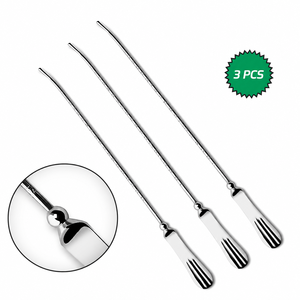
Curved 13" Sims Uterine Sounds Malleable 3 Pcs Set OB/GYN Surgical Instruments SUAVE SURGICAL INSTRUMENTS
Contact Us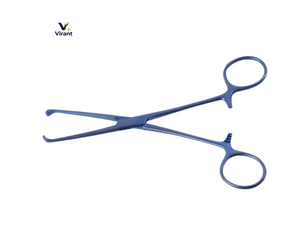
Virant Basic Veterinary Instrument Set Manual Reusable German Stainless Steel Surgical Kits CE ISO13485 Approved Class I 1 Year
Contact Us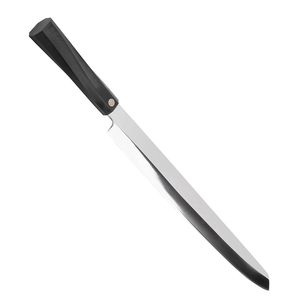
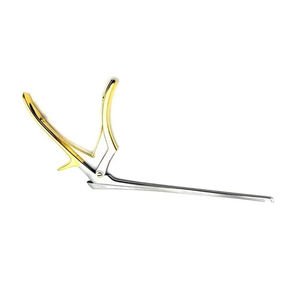
Top Quality Manual Class I Orthopedic Set Kerrison Rongeurs Surgical Instruments Stainless Steel Bone Rongeur Forceps
Contact Us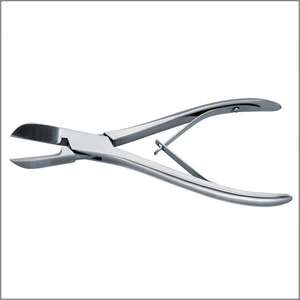
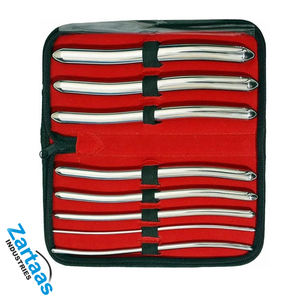
Hegar Sounds Double-Ended Set 8 Urinary/Uterine/Urethral Dilators Stainless Steel Sizes 3-4 17-18mm 20cm Convenient Pouch CE
Contact Us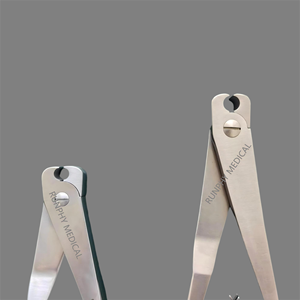
Reusable Titanium Veterinary Orthopedic Instruments for Small Animals Dog Bone Fracture Forceps Flush Wire Cutter Pliers Gold
Contact Us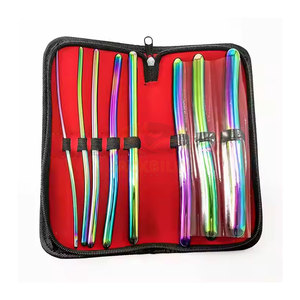
JACKBILLY High Quality Steel Manual Rainbow 8-Piece Dilator Set Uterine Urethral Plugs Hegar Bougies Storage Pouch CE MOL 1 Year
Contact UsEmpowering Global Healthcare Since 1976
Suddle Group of Industries stands as an authoritative force in precision surgical manufacturing. Operating from Sialkot, Pakistan—the world's premier cluster for surgical instrument craftsmanship—we deliver medical-grade reliability across 30+ international markets.
Engineering & Manufacturing Standards of Ophthalmic Microsurgical Forceps
An in-depth technical analysis for hospital procurement officers, medical device distributors, and private-label brand managers navigating OEM/ODM contracts for ophthalmic micro-forceps.
1. Anatomy, Micron Alignment, and Mechanical Kinematics of Ophthalmic Forceps
Ophthalmic micro-surgery requires an unprecedented level of mechanical precision. Unlike general surgical tissue clamps, ophthalmic forceps operate in sub-millimeter surgical corridors such as the anterior chamber, cornea, and posterior vitreoretinal cavity. A deviation of even 0.005mm in tip alignment can result in tissue trauma, intraoperative slippage, or tearing of fragile delicate structures like the anterior lens capsule or internal limiting membrane (ILM).
As an established OEM/ODM contract manufacturer, Suddle Group categorizes precision ophthalmic forceps into specialized functional platforms, each requiring proprietary micro-tooling, wire EDM machining, and manual bench finishing:
Capsulorhexis Forceps
Designed for continuous curvilinear capsulorhexis (CCC) during cataract surgery. Features cystotome tips, curved platforms, and sharp interlocking jaws (Utrata, Masket, Corydon style) operating through micro-incisions (1.8mm to 2.2mm).
Micro-Tying Forceps
Engineered for knot tying with ultrafine sutures (8-0 to 11-0 nylon). Available in straight, curved, or angled designs (McPherson, Kelman-McPherson, Harms) with smooth 5mm to 6mm polished platforms to avoid snagging micro-filaments.
Fixation & Corneal Forceps
Utilized for grasping corneal and scleral tissue. Fitted with delicate 1x2 teeth configurations ranging from 0.12mm to 0.5mm (Castroviejo, Colibri, Bishop-Harmon) to provide secure grip without tearing tissue.
Technical Information Gain Note: The mechanical spring rate of an ophthalmic forceps handle determines tactile feedback. Our custom spring tempering process ensures a constant resistance curve of 45g to 60g force, preventing surgeon hand fatigue during prolonged micro-vitreoretinal procedures.
2. Metallurgy Science: German Stainless Steel vs. Grade 5 Titanium Alloy
Material selection defines the operational lifespan, chemical resistance, weight, and autoclavability of ophthalmic instruments. Suddle Group utilizes raw stock certified according to strict medical-grade chemical compositions.
| Material Property | German Stainless Steel (AISI 420/440C) | Titanium Alloy (Ti-6Al-4V ELI Grade 5) | Tungsten Carbide (TC) Inserts |
|---|---|---|---|
| Rockwell Hardness (HRC) | 52 - 56 HRC | 36 - 40 HRC | 70 - 75 HRC |
| Density / Weight | 7.8 g/cm³ (Standard Weight) | 4.43 g/cm³ (45% Lighter) | 15.6 g/cm³ (High Density Insert) |
| Corrosion Resistance | High (Passivated ASTM F86) | Exceptional (Immunity to Saline/Chemicals) | Moderate (Requires Specialized Cleaning) |
| Magnetic Status | Magnetic (Martensitic) | 100% Non-Magnetic (MRI Safe) | Non-Magnetic Core |
| Autoclave Cycle Life | 1,500+ Sterilization Cycles | 3,000+ Sterilization Cycles | 2,000+ Sterilization Cycles |
| Primary Application | Standard Forceps, Scissors, Cutters | Ultralight Forceps, Micro-Vitreoretinal | Needle Holder Jaws, Tying Platforms |
3. Surface Passivation & Anti-Reflective Finishing Technologies
In modern ophthalmic surgical suites equipped with high-intensity xenon or LED microscope illumination, specular glare from metallic instruments induces visual strain for surgeons. Suddle Group incorporates advanced surface processing to mitigate optical reflection while maximizing chemical passivation:
• Satin Anti-Glare Finish: Achieved through controlled glass-bead micro-blasting followed by chemical passivation per ASTM A967 / ASTM F86. Creates a smooth matte exterior that diffuses light reflection without trapping bio-burden.
• Titanium Anodization (Color-Coded): Electro-chemical oxidation yields distinctive blue, gold, or magenta oxide layers on titanium forceps. This provides instant visual identification of tip geometry in the operating room while hardening the outer oxide skin.
• DLC (Diamond-Like Carbon) Coating: A high-end physical vapor deposition (PVD) option for OEM clients, providing a matte black finish with extreme hardness (>2,500 HV) and ultra-low friction coefficient for vitreoretinal micro-tweezer shafts.
OEM/ODM Customization Architecture & Workflow
From initial CAD concept to mass production and regulatory technical files, our structured OEM framework delivers turn-key manufacturing solutions for global medical brands.
1. CAD/CAM & Micro-Tooling
We accept 3D STEP/IGES files, technical drawings, or physical samples. Our engineering team prepares micro-tooling dies and multi-axis CNC/EDM wire cutting programs optimized for ultra-fine tolerances.
2. Prototype Approval & Testing
Pre-production samples are supplied within 2 to 3 weeks for clinical evaluation, dimensional verification under 40x optical comparators, and autoclave cycle validation.
3. Private Label & Laser Marking
Precision fiber laser marking of customer logos, SKU codes, matrix codes, and UDI (Unique Device Identification) directly on instrument handles, paired with custom sterile/non-sterile packaging.
Future Procurement Trends in Surgical Sourcing (2025–2030)
Emerging technological shifts, economic models, and regulatory updates driving global procurement decisions for hospital groups and B2B distributors.
1. Paradigm Shift Toward Minimally Invasive Ophthalmic Surgery (MIOS) & Micro-Gauges
Surgical trends are aggressively leaning toward micro-incisional cataract surgery (MICS) and 25G/27G vitreoretinal systems. Consequently, hospital procurement teams are reducing stock of traditional 19G and 20G forceps in favor of 23G, 25G, and ultra-fine 27G micro-forceps. These instruments utilize squeezed-handle actuation mechanisms where internal nitinol or titanium wires drive micro-jaws, minimizing incisional leak and eliminating suturing steps in vitreoretinal procedures.
2. Total Cost of Ownership (TCO): Reusable Premium Sets vs. Single-Use Disposal
While single-use disposable forceps saw growth due to infection control mandates, environmental sustainability directives (such as the EU Green Deal) and supply chain volatility have reignited demand for high-durability reusable forceps sets. A premium titanium ophthalmic forceps costing $150 USD that withstands 2,000 autoclave cycles yields a per-procedure cost of under $0.08 USD, compared to single-use alternatives costing $15 to $35 USD per unit. Strategic buyers are adopting hybrid models—reserving high-precision titanium reusable sets for core operating rooms while utilizing disposable platforms for outpatient triage.
3. EU MDR 2017/745 Compliance and Supply Chain Traceability
The transition from the European Medical Device Directive (MDD) to the stringent Medical Device Regulation (MDR 2017/745) has reshaped the OEM supplier landscape. Non-compliant manufacturers lacking ISO 13485 certification or robust clinical evaluation reports (CER) are being filtered out of European tender lists. Buyers are consolidating purchase orders with audited OEMs like Suddle Group that provide full material certificates (EN 10204 3.1), biocompatibility data, cleanroom packaging, and UDI barcode integration.
Why Partnering with Suddle Group Elevates Your Brand
Rooted in Sialkot’s 50-year surgical heritage, Suddle Group provides an vertically integrated ecosystem eliminating middleman margins while guaranteeing compliance.
Vertically Integrated Production
We control every step in-house: drop forging, precision CNC milling, vacuum heat treatment, micro-polishing, ultrasonic washing, and optical inspection. Zero subcontracting ensures total batch-to-batch consistency.
Global Regulatory Compliance
Operating under certified ISO 13485:2016 and ISO 9001:2015 Quality Management Systems. Facility registered with US FDA and instruments carrying CE Mark approvals for smooth custom clearance.
Flexible Low MOQs & Fast Shipping
Standard catalog orders start from as low as 50 units per pattern, with custom OEM runs starting at 200 units. Supported by global sales offices in the UK, Canada, and Saudi Arabia for real-time support.
Frequently Asked Questions for B2B & OEM Sourcing
Direct technical answers addressing the critical evaluation criteria of medical buyers and hospital tenders.
Partner with a Trusted Surgical Manufacturer Today
Whether you are expanding a medical distribution network, sourcing hospital tenders, or developing an OEM ophthalmic device line, our engineering team is ready to deliver precision craftsmanship backed by 50 years of excellence.