Featured Orthopedic & Surgical Instrument Catalog
Explore our precision-engineered surgical hand tools, bone cutting forceps, dental kits, and disc rongeurs built to strict international metallurgical standards.
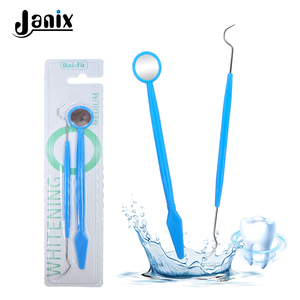
Professional Dental Cleaning Tool Set Mouth Mirror Tartar Scraper Plaque Remover Kit For Dentist & Home Oral Care
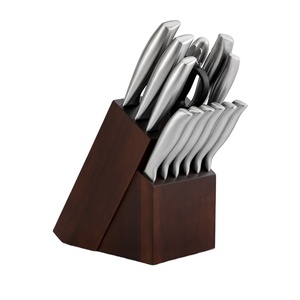
Knife Sets, German Stainless Steel Kitchen Knife Block Sets with Built-in Sharpener Scissors 14pcs
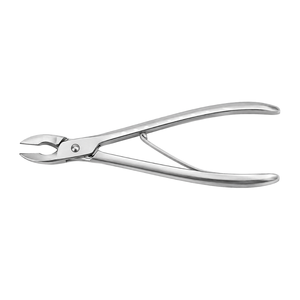
Bone Cutting Forceps Surgical Bone Cutter Orthopedic Surgery Tools
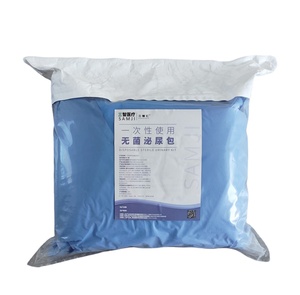
Customizable Patient Use Extremity Surgical Operating Kit Premium Quality Surgical Pack
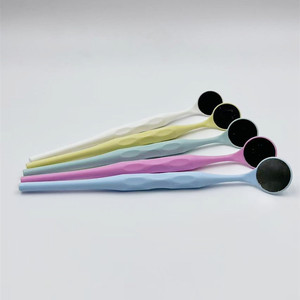
SJ Plastic Disposable Dental Mirror Anti Fog Mouth Mirrors Inspection Dental Mouth Mirror With Anti-slip Handle
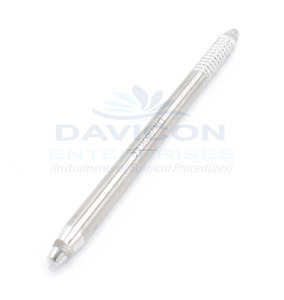
Dental Mouth Mirror Handle Stainless Steel Reusable Dental Examination Mirror Handle for Clinic Use
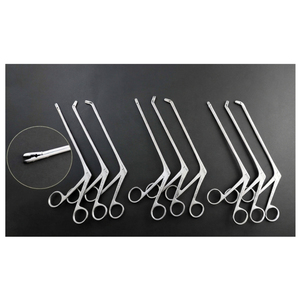
Professional 9 Piece Intervertebral Disc Rongeur Set for Laminectomy Spine Surgery 2 3 4mm 18cm Manual Surgical Tools
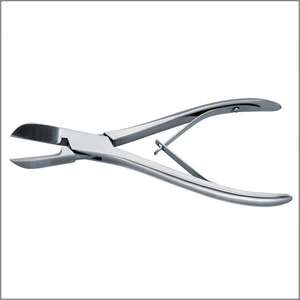
Liston Bone Forceps 17cm Orthopedic Bone Cutting Surgical Forceps CE Zelmi Surgical
B2B Sourcing Guide: Mechanics, Metallurgy, & Quality Standards of OEM/ODM Orthopedic Wire Cutters
Information Gain Analysis:
Standard surgical scissors or basic cutters fail rapidly when subjected to the shear yield stress of hardened surgical stainless steel wires (tensile strength exceeding 1,200 MPa). Premium OEM/ODM Orthopedic Wire Cutters must integrate vacuum-heat-treated 420/440C martensitic stainless steel bodies with micro-grain Tungsten Carbide (TC) inserts braze-welded at temperature thresholds above 1,050°C. This ensures high fracture toughness and maintenance of mechanical advantage during intraoperative wire excision.1. Kinematic Mechanics & Shear Stress Physics in Orthopedic Cutting
The cutting action of an orthopedic wire cutter relies on double-action compound leverage or high-ratio single-pivot mechanics. During the cutting phase, compressive hand forces (typically 150 N to 350 N exerted by the surgeon) are amplified through mechanical leverage ratios reaching 15:1 to 25:1 at the cutting edge. This generates local shear stresses at the contact point exceeding the ultimate shear strength of the wire (up to 2.2 GPa for hard cobalt-chrome or titanium alloy pins).
Failure to engineering proper blade clearance (tolerances under 0.015 mm) results in plastic deformation of the wire rather than clean shearing, leading to burr formation on the implanted pin end. Sharp burrs present serious clinical risks, including soft tissue irritation, tendon rupture, and delayed surgical wound healing. Suddle Group's custom OEM wire cutters feature precision-ground cutting bevels that yield flush cuts, minimizing traumatic post-operative tissue friction.
| Cutter Classification | Target Material & Wire Diameter | Leverage Kinematics | Metallurgical Jaw Inserts | Primary Surgical Application |
|---|---|---|---|---|
| Front Wire & Pin Cutter | Soft Wire (up to 2.0mm) / Hard Wire (up to 1.6mm) | Single-Pivot / Direct Action | Tungsten Carbide (YG6X Grade, HRC 60) | Orthopedic Trauma, Hand Surgery, K-Wire Trimming |
| Side Wire Cutter (Cannulated/Flush) | Cerclage Wire (0.8mm to 1.5mm) | Compound Double-Joint Leverage | Martensitic AIS 420J2 + Gold TC Inlay | Reconstructive Joint Surgery, Sternotomy Wire Removal |
| Heavy-Duty Pin Cutter | Steinmann Pins & Rods (2.0mm to 6.4mm) | Double-Action Heavy Compound Joint | Tungsten Carbide Reinforced (HRC 62-65) | Spinal Fixation, Femoral & Tibial Nailing, External Fixation |
| End-Cutting Nipper / Wire Shear | Soft Fixation Wire (up to 1.2mm) | Ergonomic Spring-Loaded Handle | High-Carbon AISI 440C Stainless Steel | Maxillofacial & Orthodontic Surgical Procedures |
Why Global Healthcare Brands Partner with Suddle Group for OEM/ODM Sourcing
Operating out of Sialkot, Pakistan—the global hub of surgical craftsmanship—Suddle Group integrates 50+ years of forging tradition with modern CNC multi-axis milling, vacuum heat treatment, and ISO 13485 quality management.
In-House Die Forging & CNC Machining
We control the complete supply chain from raw surgical steel drop-forging to final CNC jaw profiling. This eliminates dimensional variances, ensures jaw-to-pivot concentricity, and guarantees long-term alignment across thousands of autoclave cycles.
Vacuum Heat Treatment & Passivation
Every wire cutter undergoes computerized vacuum furnace heat treatment targeting HRC 50–55 on instrument arms and HRC 58–62 on TC cutting edges. Chemical passivation per ASTM A967 creates a robust chromium-oxide passive layer resistant to pitting and intergranular corrosion.
Complete Regulatory Dossier & Compliance
Our facility operates under strict ISO 13485:2016 and ISO 9001:2015 quality management systems. All instruments carry CE mark technical documentation and FDA establishment registrations, providing smooth customs clearance for North American, European, and GCC tenders.
Global OEM & Private Label Solutions
From custom fiber-optic laser etching of your brand logo and SKU serial numbers to tailor-made sterilizing cassette trays, our engineering department provides rapid 3D CAD modeling and prototype delivery within 2 to 3 weeks.
Future Sourcing & Technological Trends in Orthopedic Cutting Instruments
1. Diamond-Like Carbon (DLC) & Black Titanium Coatings
Next-generation orthopedic cutters incorporate physical vapor deposition (PVD) coatings such as DLC and Titanium Nitride (TiN). These ultra-hard thin-film ceramic coatings reduce surface friction, prevent light glare under operating theatre lights, and boost surface hardness above Vickers HV 2,500.
2. Modular & Field-Replaceable Cutting Inserts
To support hospital sustainability goals and lower sterilization tray turnover costs, emerging OEM designs feature replaceable Tungsten Carbide jaw inserts fastened via precision micro-screws. This allows central sterile supply departments (CSSD) to renew cutting edges without discarding instrument handles.
3. UDI-Compliant RFID Smart Tracking Integration
With global mandates for Unique Device Identification (UDI) by the US FDA and EU MDR, surgical wire cutters are now engineered with recessed laser-etched 2D DataMatrix codes or embedded passive RFID chips for seamless inventory management and sterilization cycle tracking.
How We Build Custom Orthopedic Instruments For Your Brand
Phase 1: Engineering & CAD Specification
Submit 2D technical drawings, 3D STEP files, or physical benchmark samples. Our metallurgical engineers review blade geometry, leverage pin placement, and material selection (420 vs 440C vs Titanium).
Phase 2: Tooling & Rapid Prototyping
We manufacture custom drop-forge dies and CNC fixtures. Functional prototypes are delivered for mechanical shear testing, fatigue assessment, and surgeon ergonomics evaluation within 14–21 business days.
Phase 3: Automated Production & Laser Marking
Upon sample sign-off, full batch production commences under ISO 13485 controls. Instruments are laser-engraved with your company logo, catalog numbers, CE mark, and lot codes for full supply chain traceability.
Phase 4: Inspection, Packaging & Export
100% optical quality checks verify jaw tolerance, box-lock alignment, and cutting force. Finished products are packaged in cleanroom environment pouches or custom branded display boxes for air/sea export.
B2B Procurement FAQs: Orthopedic Wire Cutters & OEM Supply
Essential details on material specifications, minimum order quantities, regulatory compliance, and custom ordering procedures.
Q: What types of wire cutters does Suddle Group manufacture?
We manufacture a comprehensive array of surgical cutting tools, including front wire cutters, side wire cutters, end-cutting nippers, heavy-duty compound pin cutters, cannulated cerclage wire cutters, and tungsten carbide-reinforced bone cutters suitable for Kirschner wires (0.8mm to 3.0mm) and Steinmann pins (up to 6.4mm).
Q: Which certifications and regulatory documents accompany wholesale shipments?
Our production facilities strictly operate under ISO 13485:2016 and ISO 9001:2015 quality management standards. Instruments carry CE marking, and our facility is registered with the US FDA. Every shipment includes Declarations of Conformity, raw material mill test certificates, vacuum heat treatment logs, and passivation test reports.
Q: What is your Minimum Order Quantity (MOQ) for catalogue and OEM orders?
For standard catalogue items, our minimum order quantity starts at 50 pieces per instrument pattern. For custom OEM designs, private label laser etching, or specialized jaw dimensions, MOQs typically range from 200 to 500 pieces depending on manufacturing complexity.
Q: Do you offer OEM and private label instrument manufacturing?
Yes. OEM and private label manufacturing is a core business division. We produce instruments built to your technical drawings or physical samples, apply fiber-optic laser brand etching, supply custom packaging, and assist with technical file assembly for global regulatory approvals.
Q: What surgical steel grades and materials are utilized in your wire cutters?
We utilize premium German-grade martensitic stainless steels (AISI 420J2 and AISI 440C) for high tensile strength and corrosion resistance. For extreme cutting endurance, high-density Tungsten Carbide (YG6X alloy grade, HRC 58-62) inserts are vacuum-brazed onto the cutting edges.
Q: What are typical manufacturing lead times and global shipping options?
Standard catalogue orders are typically produced and dispatched within 2 to 4 weeks. Custom OEM projects take 4 to 8 weeks depending on tooling requirements. We offer express air freight (3 to 5 days), standard air cargo (7 to 10 days), and containerized sea freight (25 to 35 days) with complete customs documentation.
Q: How do your cutters handle repeated hospital autoclave cycles?
Our instruments are chemically passivated per ASTM A967 and pass rigorous copper-sulfate immersion tests. They are engineered to withstand repeated steam autoclave sterilization cycles (134°C / 273°F at 2.1 bar) without rusting, joint binding, or discoloration.
Q: How can medical distributors apply for exclusive territorial distribution rights?
We welcome partnerships with established surgical distributors. Qualified partners receive competitive distributor tier pricing, co-branded marketing materials, sample kits, and protected territory agreements. Contact our international sales director via the inquiry portal to get started.