Featured Reusable Surgical & Medical Tools
As a leading China surgical instrument manufacturer and exporter, our high-precision reusable tools undergo rigorous martensitic stainless steel forging, precision CNC finishing, and passivation validation to support repeated steam autoclaving cycles in modern operating theaters.
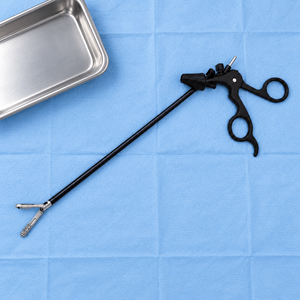
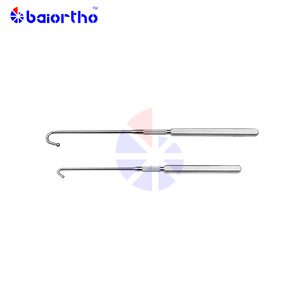
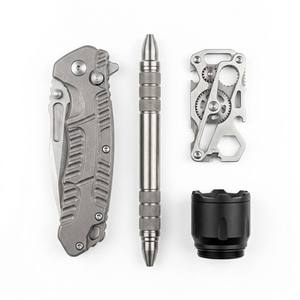
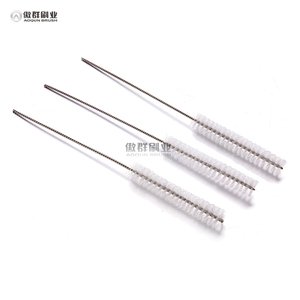
Executive Industry Whitepaper: The Strategic Evolution of Reusable Surgical Tool Sourcing
Global healthcare systems are navigating a pivotal paradigm shift. Procurement directors and Central Sterile Supply Departments (CSSD) across Europe, North America, and the Middle East are re-evaluating the economics, environmental footprint, and clinical reliability of surgical instrumentation. For over two decades, the market saw an aggressive rise in disposable single-use tools. However, escalating medical waste management costs, supply chain vulnerabilities, and rigorous corporate ESG (Environmental, Social, and Governance) mandates have firmly restored high-grade reusable surgical instruments as the gold standard for sustainable clinical care.
As a premier China reusable surgical tools exporter, our manufacturing infrastructure bridges master metallurgy with automated precision engineering. Reusable surgical hand tools—spanning general surgery, minimally invasive laparoscopy, orthopedic bone manipulation, plastic surgery, and veterinary procedure sets—demand uncompromising structural integrity. To achieve a functional service life exceeding 1,000 autoclave processing cycles without pitting, jaw misalignment, or tension loss, exporters must master advanced metallurgical chemistry, heat treatment kinematics, and automated electro-passivation.
Technical Deep-Dive: Surgical Metallurgy & Surface Passivation Physics
The performance of any surgical tool is fundamentally determined before it ever reaches an operating room—it begins at the atomic level of the raw alloy. Our manufacturing units utilize certified German-grade and specialized surgical grade stainless steels that strictly adhere to ASTM F899, ISO 7153-1, and DIN standards.
Utilized for cutting edges, scissors, chisels, and rongeurs. Through vacuum heat treatment and oil quenching, we achieve a Rockwell C Hardness (HRC) of 50–56, ensuring razor-sharp retention and resistance to mechanical wear during heavy bone or tissue incision.
Non-magnetic alloy featuring high nickel and molybdenum content. Ideal for non-cutting cannula tubes, retractor frames, and suction wands where maximum corrosion resistance against physiological saline and bodily fluids is required.
For needle holders and microsurgical forceps, tungsten carbide inserts (500 Vickers hardness) are vacuum-brazed onto jaw contact surfaces. This delivers firm, non-slip suture gripping without premature jaw dulling.
Controlled Passivation & Autoclave Corrosion Resistance
A primary cause of premature surgical instrument failure in hospital CSSD environments is pitting corrosion caused by free iron residues left behind after machining. To eliminate this vulnerability, our facilities integrate multi-stage automated Ultrasonic Passivation in accordance with ASTM A967 and ISO 16061 standards.
| Process Stage | Technical Specification | Operational Purpose | Quality Control Test |
|---|---|---|---|
| 1. CNC Machining & Fitting | Tolerances within ±0.01mm | Eliminates micro-gaps in box locks and ratchets | CMM Optical Scanning |
| 2. Vacuum Heat Treatment | 1020°C – 1050°C in inert atmosphere | Establishes required HRC hardness & ductility | Rockwell Hardness (HRC) Test |
| 3. Electro-Polishing | Micro-smoothing surface finish (<0.2μm Ra) | Removes surface burrs and reduces biofilm adhesion | Profilometer Surface Roughness Check |
| 4. Citric Acid Passivation | ASTM A967 Method, controlled pH & temp | Dissolves free iron, forms passive Chromium Oxide (Cr&sb2;O &sb3;) film | Boiling Water & Copper Sulfate Testing |
| 5. Autoclave Validation | 134°C steam at 2.2 bar pressure (50+ test cycles) | Simulates heavy hospital reprocessing environments | Corrosion & Staining Microscopic Inspection |
Enterprise Capabilities & OEM Sourcing Advantage
Choosing the right China reusable surgical tools exporter requires evaluating more than just item unit prices; it requires verifying full manufacturing traceability, global regulatory compliance, and customized OEM/ODM engineering capabilities.
Our manufacturing facilities operate strict Quality Management Systems certified to ISO 13485:2016 and ISO 9001. All product lines are CE marked under EU MDR 2017/745 Class I/Ir standards and FDA registered for direct shipment into North American and European healthcare networks.
We offer full OEM and private label production services. From custom 3D CAD modeling, rapid titanium or stainless prototype forging, laser engraving of corporate branding and UDI matrix codes, to custom tray packaging design.
Unlike automated mass-consumer manufacturing, every single surgical tool undergoes hand-fitting by seasoned artisans. Box lock alignments, ratchet engagement force, tip closure accuracy, and spring tension are verified piece-by-piece before final packaging.
Future Procurement Trends in Reusable Surgical Tools (2025–2030)
As hospital procurement strategies modernize, three dominant structural trends are defining the future of reusable medical instrument sourcing globally:
1. RFID & Matrix Unique Device Identification (UDI) Integration
Global health authorities (including the US FDA and European Commission) strictly mandate 2D DataMatrix laser-etching down to individual tool patterns. The market is rapidly moving toward embedded micro-RFID transponders within instrument handles. This enables automated inventory scanning, real-time autoclave tracking, and automated lifecycle counting across Central Sterile Processing departments.
2. Surface Nano-Coatings & DLC (Diamond-Like Carbon) Finishes
Black-finish non-reflective instruments treated with physical vapor deposition (PVD) Titanium Nitride (TiN) or DLC coatings are becoming standard in minimally invasive surgery (MIS) and laser-assisted surgical procedures. These ceramic-like nano-layers eliminate glare under intense operating room LED lighting, increase surface hardness beyond 70 HRC, and significantly lower friction coefficients on sliding shafts.
3. Direct-from-Manufacturer Hybrid Supply Chains
Tier-1 hospital chains and medical brand owners are increasingly bypassing multi-layered regional brokers in favor of direct strategic relationships with certified China reusable surgical tools exporters. This direct alignment grants brands greater oversight over batch consistency, shortens OEM design cycles from months to weeks, and secures predictable unit margins amidst volatile global inflation.
Frequently Asked Questions (Sourcing & Procurement FAQ)
Essential technical, quality, and logistical answers for medical purchasing directors, OEM brand managers, and clinical distributors:
Our reusable surgical tools are produced from high-spec German and Japanese martensitic stainless steel alloys (AISI 420, 440A/B/C) and austenitic AISI 316L. After precision fitting, instruments undergo multi-stage chemical passivation (ASTM A967 standard), creating a stable, self-healing Chromium Oxide (Cr₂O₃) surface layer that withstands over 1,000 steam sterilization cycles at 134°C (2.2 bar) without rusting, staining, or degrading mechanical ratchets.
Every export shipment includes a complete technical documentation package: ISO 13485:2016 Quality Management Certificate, CE Declaration of Conformity (EU MDR 2017/745), US FDA Facility Registration details, Material Mill Test Certificates (EN 10204 3.1), and Batch Passivation Test Reports.
For standard catalog instrument patterns, our baseline MOQ starts at 50 pieces per item code. For custom OEM designs, private label laser engraving, or custom procedure sets, typical initial production runs start between 200 and 500 units depending on geometry and tooling complexity. Tiered volume discounts automatically apply above 500 units.
Yes. OEM/ODM engineering is a core competency. Our technical department converts customer technical drawings (STEP, IGES, SolidWorks) or physical reference samples into production dies. We supply pre-production functional prototypes for dimensional sign-off and clinical evaluation prior to mass production.
We provide three primary surface finishes based on clinical application: (1) Satin/Matte Finish (standard for OR tools to eliminate light glare), (2) Mirror Polish Finish (for plastic surgery and dental tools to facilitate cleaning inspection), and (3) Black PVD Coating / Titanium Nitride (for laser surgery and non-reflective micro-dissection).
Standard catalog items dispatch within 2 to 4 weeks. Custom OEM production runs generally ship within 4 to 6 weeks following prototype approval. We offer door-to-door express air freight (3–5 business days), air cargo (7–10 days), and sea container shipping for bulk distributor orders, complete with customs clearance documentation.
Enterprise Heritage: 50+ Years of Precision Engineering Excellence
Founded on a legacy dating back to 1976, our industrial footprint has grown into a major manufacturing group supporting over 1,500 skilled craftsmen and metallurgical engineers. Operating across specialized production divisions—spanning general surgery, dental extraction and orthodontics, orthopedic bone chiseling, ENT suction, cardiovascular vascular clamping, and veterinary surgery—we manage every step of the supply chain under one roof.
By combining hand-forged craftsmanship with modern multi-axis CNC milling, automated vacuum heat-treatment furnaces, and laser-guided measurement systems, we deliver surgical instruments that meet the strict expectations of hospital tenders in over 30 countries across North America, Europe, the Middle East, and Asia-Pacific.