Featured Uterine Dilator Sets & Clinical Sounds
Explore our CE & ISO 13485 certified gynecological dilatation instruments manufactured with premium German-grade stainless steel.

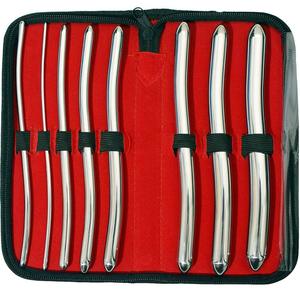

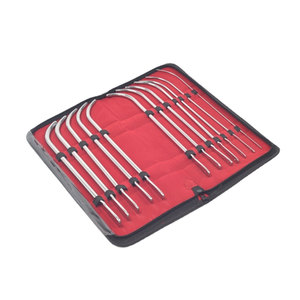
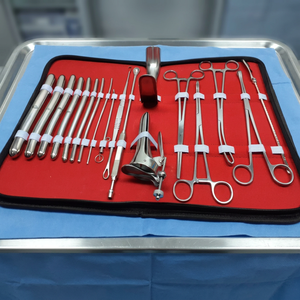
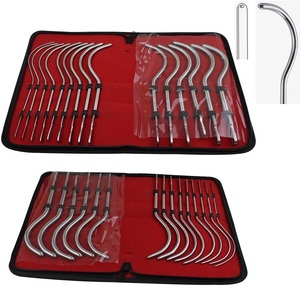
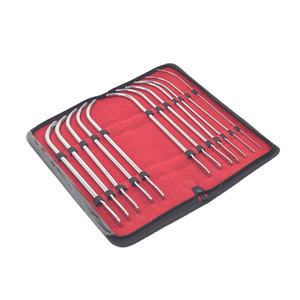
1. Executive Sourcing Summary: Navigating China’s Uterine Dilators Manufacturing Ecosystem
In modern gynecological surgery, obstetrics, and clinical diagnostic procedures, the structural integrity, surface finish, and metallurgical composition of uterine dilators set are non-negotiable parameters. Global healthcare distributors, medical device brand owners, and hospital procurement directors evaluating China Uterine Dilators Set Factories & Suppliers require detailed insight into material compliance, manufacturing precision, and regulatory validation. This technical whitepaper analyzes the key factors involved in sourcing surgical-grade Hegar, Hank, Pratt, and Hawkin-Ambler dilator sets directly from top-tier Chinese manufacturing centers.
Driven by advancements in automated CNC micro-machining, electrochemical passivation, and ISO 13485-certified quality management systems, leading Chinese medical instrument manufacturers have bridged the gap between cost efficiency and premium European metallurgical quality. Today, leading suppliers produce gynecological instruments utilizing imported German 420 martensitic stainless steel and 316L austenitic alloys, satisfying both EU MDR (Medical Device Regulation 2017/745) and US FDA Class I general surgical instrument guidelines.
Information Gain Insight: Sourcing uterine dilator sets is not merely an exercise in price comparison. The micro-roughness (Ra value) of the shaft, the gradual taper ratio of the tip, and the chemical composition of the passive chromium oxide layer dictate clinical outcomes, patient safety during cervical expansion, and resistance to repeated stress-corrosion during high-temperature steam sterilization cycles.
Technical Typology & Clinical Application Matrix
Understanding the anatomical intent behind distinct dilator geometries is crucial for B2B buyers assembling specialized surgical catalog offerings or bidding on government hospital tenders:
2. Metallurgy, Engineering Precision & Passivation Standards
The clinical lifetime of a surgical instrument is dictated by its structural chemistry and heat treatment processes. Premium Chinese suppliers implement strict metallurgical controls to eliminate common failure modes such as pitting corrosion, stress cracking at the central handle join, or tip distortion.
Steel Grade Comparison & Mechanical Integrity
Surgical instruments manufactured by OEM leaders rely on specific martensitic and austenitic stainless steel alloys tailored to instrument function:
| Dilator Type / Component | Material Grade | Hardness (Rockwell C) | Key Properties | Autoclave Resistance |
|---|---|---|---|---|
| Hegar Double-Ended Dilator | AISI 420 / 1.4021 Stainless | HRC 48 - 52 | High tensile strength, deformation resistance, rigid form | > 2,000 cycles |
| Hank Dilator (Hollow Shaft) | AISI 304 / 316L Stainless | HRC 25 - 35 (Work Hardened) | Lightweight design, extreme pitting & chemical resistance | > 3,000 cycles |
| Pratt / Curved Bougie Set | AISI 410 / 420 Medical Grade | HRC 45 - 50 | Optimal tip flexibility without permanent bending | > 2,500 cycles |
| Rainbow / Titanium Coated | AISI 420 + PVD TiN/TiCN | HRC 55+ (Surface Layer) | Anti-glare, ultra-hard wear layer, color-coded identification | > 3,500 cycles |
Micro-Polishing & Surface Passivation Protocol
To eliminate micro-cavities where organic debris or bacterial biofilm can harbor, the surface of each dilator undergoes automated mechanical polishing followed by electropolishing to achieve a mirror or satin finish with a surface roughness of Ra < 0.2 µm. Furthermore, proper citric or nitric acid chemical passivation (conforming to ASTM A967 and ISO 16061) strips free iron from the surface, forming an impenetrable, self-healing Chromium Oxide (Cr₂O₃) layer.
3. Global Procurement Trends & Search Intent Intelligence (2026-2030)
Analyzing global commercial search patterns, hospital tender requirements, and medical device supply chain data reveals several structural shifts in how uterine dilator sets are specified, customized, and procured globally:
4. Enterprise OEM Advantages & Factory Quality Control Flow
As a leading surgical instrument manufacturing conglomerate with decades of specialized production experience, our partner facilities integrate traditional hand craftsmanship with modern robotic machining to deliver superior gynecological sets. We control the complete value chain in-house—eliminating third-party markup and guaranteeing absolute batch-to-batch repeatability.
5-Stage Integrated Quality Inspection System
- Raw Material Spectrometry Verification: Every batch of incoming stainless steel rods undergoes X-ray fluorescence (XRF) spectroscopy to confirm exact elemental composition (Cr, Ni, C, Mo).
- CNC Die Forging & Shaping: Computer-controlled hot forging guarantees structural grain alignment without internal void defects or mechanical weak points.
- Thermal Treatment & Controlled Tempering: Vacuum heat treatment achieves precise Rockwell hardness, balancing tip rigidity with fracture toughness.
- Ultrasonic Cleaning & Passivation: Automated multi-stage ultrasonic baths remove all polishing compounds, followed by nitric acid passivation for ultimate corrosion prevention.
- 100% Dimensional & Visual Audit: Optical comparators verify tip taper angles, millimeter gauge markings, and micro-finish uniformity before final sterilizable pouch packaging.