Featured Orthopedic & Surgical Instrument Sets
Explore precision-crafted, ISO 13485 certified surgical instruments manufactured to exact German metallurgical standards for global medical supply networks.
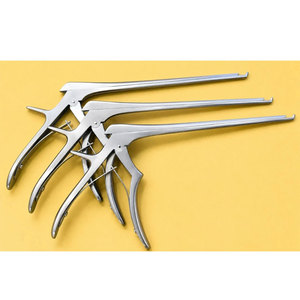
1. Executive Sourcing Overview: The Strategic Imperative of Precision Bone Holding Forceps
In modern orthopedic reconstructive surgery and complex trauma management, rigid internal fixation and anatomical fracture reduction depend entirely upon the tactile response, structural integrity, and mechanical clamping strength of bone holding forceps. As healthcare systems globally demand reduced intraoperative surgical times and lower postoperative complication rates, hospital procurement committees and surgical instrument distributors face unprecedented scrutiny. Selecting a premier bone holding forceps supplier requires evaluating not merely price per unit, but metallurgical purity, micro-structural tolerance, ergonomic calibration, and international regulatory compliance (ISO 13485, CE MDR, and US FDA registration).
Bone holding forceps serve as the primary extension of an orthopedic surgeon's hand during open reduction and internal fixation (ORIF) procedures. Whether immobilizing diaphyseal shaft fractures, stabilizing periarticular fragments, or holding internal compression plates flush against bone cortical walls, these instruments endure massive mechanical lever forces. A minor failure in jaw serration geometry, speed-lock ratcheting, or box-joint alignment can result in intraoperative slip, soft-tissue tearing, or loss of fracture compression. Consequently, evaluating top trusted suppliers necessitates a deep technical dive into manufacturing workflows, forge chemistry, and post-assembly quality verification protocols.
2. Taxonomy & Engineering Classification of Bone Holding Forceps
To establish rigorous procurement specifications, surgical purchasing agents and OEM brand managers must categorize bone holding forceps according to their mechanical locking mechanisms, jaw architecture, and specific clinical intent. Leading manufacturers maintain comprehensive portfolios spanning hundreds of localized pattern variations.
Kern & Lane Forceps
Heavy-duty reduction forceps engineered with aggressive, deep-tooth serrated jaws. Ideal for stabilizing large long-bone shafts (femur, tibia, humerus) under heavy muscular resistance.
Verbrugge & Self-Centering
Designed with a speed-lock threaded nut or semi-flexible arc jaw mechanism. Allows dynamic, incremental clamping force around irregular bone circumferences and contoured compression plates.
Lowman & Plate Holding
Features 2-prong or 3-prong curved jaw profiles specifically contoured to clamp dynamic compression plates (DCP) directly onto cortical bone without obscuring screw placement holes.
Technical Comparison of Primary Bone Reduction Instruments
The following data visualization matrix details the mechanical characteristics, alloy standards, and primary clinical applications across major bone holding instrument categories:
| Instrument Pattern | Locking Mechanism | Jaw Configuration | Metallurgical Grade | Primary Clinical Application |
|---|---|---|---|---|
| Verbrugge Forceps | Threaded Speed-Lock Nut | Self-Centering Curved Jaws | AISI 420 Martensitic Steel | Diaphyseal Femoral & Tibial Fracture Reduction |
| Kern Bone Forceps | Ratcheted Box Joint (With/Without Lock) | 4-Point Aggressive Tooth Serration | AISI 420 / 440 High-Carbon Steel | Heavy Traction & Direct Alignment of Long Bones |
| Lowman Bone Clamp | Calibrated Screw Thread Clamp | Double-Pronged & Single-Caliper Prongs | AISI 316L / 420 Grade | Plate-to-Bone Stabilization in ORIF Procedures |
| Ullrich Bone Forceps | Multi-Position Ratchet Handle | Deeply Cut Transverse Serrations | AISI 420 Stainless Steel | Pelvic Trauma & Substantial Metaphyseal Fixation |
| Pointed Reduction Forceps | Speed-Lock / Spin-Lock Mechanism | Sharp Pointed Tips for Minimal Contact | Tungsten Carbide Reinforced Points | Perichondral & Small Fragment Articular Reduction |
3. Metallurgical Excellence & Manufacturing Science (E-E-A-T Benchmark)
A primary differentiator between low-tier suppliers and authoritative medical device manufacturers lies in raw material selection and thermodynamic heat treatment. Premium bone holding forceps must be crafted from high-grade German martensitic stainless steel compounds (conforming to ISO 7153-1 and ASTM F899 standards).
The Crucible of Durability: Forging, Tempering, and Passivation
At Suddle Group of Industries (established in 1976 in Sialkot, Pakistan), the manufacturing process begins with drop-die hot forging of solid stainless steel billets. The raw forgings undergo controlled thermal cycles inside vacuum furnaces to achieve an optimal Rockwell Hardness (HRC 48-54). This exact hardness range ensures that the instrument maintains sharp jaw serrations and spring-tensioned ratchet teeth without suffering micro-fissures or fatigue fractures during heavy stress.
Precision CNC Milling & Box-Joint Tolerances
Every box-joint and thread channel is milled on multi-axis CNC machines to tolerances within ±0.01 mm. This eliminates lateral jaw play and binding during one-handed surgical operation.
Electropolishing & Chemical Passivation
Instruments undergo ultrasonic cleaning followed by citric/nitric acid passivation according to ASTM A967. This builds a microscopic chromium oxide (Cr2O3) passive layer that guarantees resistance against repeated autoclave steam cycles (134°C).
4. Strategic Enterprise Advantage: The Suddle Group Heritage
Sourcing surgical instrumentation from an established, vertically integrated manufacturer offers unmatched supply chain stability and commercial confidence. With over 50 years of manufacturing experience in Sialkot—the global hub of surgical craftsmanship—Suddle Group of Industries stands as a cornerstone supplier for international healthcare distributors, hospital networks, and private-label medical brands.
Spanning an expansive manufacturing infrastructure staffed by over 1,500 skilled craftsmen and biomedical engineers, Suddle Group maintains total in-house control over every production phase. From CAD/CAM prototype engineering, custom die creation, and hot drop forging, to precision hand-fitting, final polishing, laser etching, and cleanroom packaging—nothing is outsourced. This guarantees 100% batch-to-batch repeatability and total material traceability.
- ISO 13485:2016 Quality Management Systems for Medical Devices
- ISO 9001:2015 Quality Management Compliance
- CE Marking under EU Medical Device Regulation (MDR 2017/745)
- FDA Registered Facility supporting seamless entry into the US healthcare market
- Full compliance with DIN EN ISO surgical instrument dimensional standards
5. Future Procurement Trends & Surgical Technology Developments (2025–2030)
As the global orthopedic devices market surges toward an estimated $65 Billion by 2030, the procurement strategies for hand instruments are evolving rapidly. B2B medical procurement officers must position their supply chains to adapt to three major technological and economic shifts:
A. Lightweight Alloys & Ergonomic Hand Strains Reduction
Surgeon burnout and repetitive strain injuries (RSI) have pushed manufacturers to innovate ergonomic handle geometries. Future production lines are integrating lightweight titanium nitride (TiN) coatings, hollow-core stainless handles, and matte anti-glare micro-bead finishes. These features reduce hand fatigue during multi-hour trauma cases while eliminating light reflection under high-intensity operating theatre LED arrays.
B. Unique Device Identification (UDI) & Digital Asset Tracking
Global regulatory bodies—including the US FDA and EU MDR—now require direct part marking (DPM) of UDI barcodes on reusable surgical tools. Advanced suppliers utilize high-precision fiber laser etching to imprint microscopic, high-contrast 2D DataMatrix codes onto the handles of bone holding forceps. This allows hospital Central Sterile Supply Departments (CSSD) to track cycle counts, maintenance intervals, and sterilization history automatically.
C. Modular & Procedure-Specific Surgical Trays
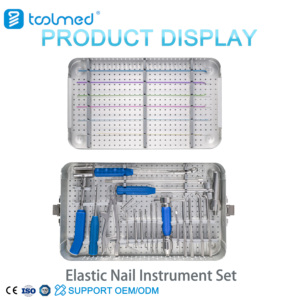
Hospitals are transitioning away from buying isolated standalone tools in favor of complete, procedure-optimized surgical kits. Forward-thinking suppliers provide customized tray integration, where Verbrugge forceps, Kern reduction clamps, Kerrison rongeurs, and bone chisels are organized into modular, steam-sterilizable aluminum cassettes tailored for specific trauma algorithms.
6. B2B Vendor Evaluation Checklist & Sourcing Protocol
When auditing prospective bone holding forceps suppliers, procurement directors should execute a structured multi-point verification protocol before issuing purchase orders or signing long-term OEM contracts:
| Audit Dimension | Evaluation Criteria & Standards | Red Flags / Warning Signs |
|---|---|---|
| Raw Material Traceability | Request Mill Test Certificates (MTC) proving AISI 420/440 grade steel compliance with ISO 7153-1. | Supplier unable to provide steel batch heat numbers or chemical breakdown charts. |
| Quality System Audits | Valid ISO 13485 certificate issued by an accredited Notified Body (e.g., TÜV, SGS, BSI). | Self-certified ISO certificates or unverified third-party registrations. |
| Functional Inspection | 100% pre-shipment testing of speed-lock ratchets, jaw serration alignment, and surface smoothness. | Sticking joints, lateral jaw misalignment under pressure, or rough burrs on box joints. |
| Corrosion Resistance | Boiling water and copper sulfate corrosion test reports per ISO 13402 / ASTM F1089. | Pitting corrosion or rust spots appearing after initial autoclave exposure cycles. |
| OEM Capability | In-house laser engraving, private label packaging, custom CAD design, and rapid prototyping. | Broker or trading company outsourcing production to unverified backyard units. |
7. Frequently Asked Questions (FAQ) for Global Procurement Officers
Partner with a World-Class Bone Holding Forceps Manufacturer
Empower your surgical product portfolio with 50+ years of manufacturing heritage, ISO 13485 precision, and competitive direct-from-factory B2B pricing. Contact our engineering team today to discuss bulk supply, OEM customization, or sample evaluation.
Contact Us