Recommended Surgical & Specialty OEM Instrument Sets
Explore our core CE-certified surgical instruments engineered for high-durability surgical performance in Austrian health clusters.
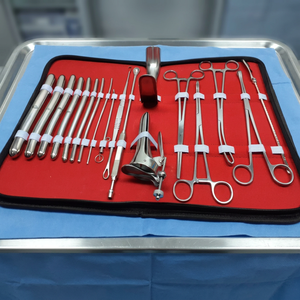
BK Industries Uterine Hegar Dilator Set Manual Steel Reusable CE Certified Class I General Surgery Dilatation Curettage Kit
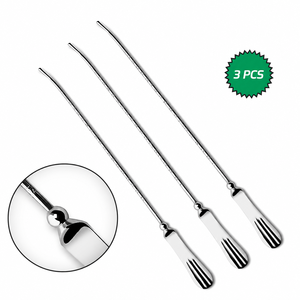
Curved 13” Sims Uterine Sounds Malleable 3 Pcs Set OB/GYN Surgical Instruments SUAVE SURGICAL INSTRUMENTS
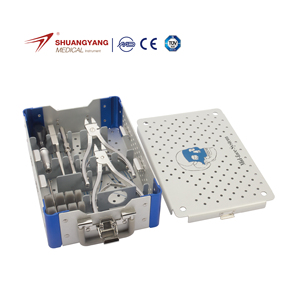
Shuangyang OEM & ODM Available Maxillofacial Instruments Kit For Facial Bone Surgery And Craniofacial Surgical Procedures
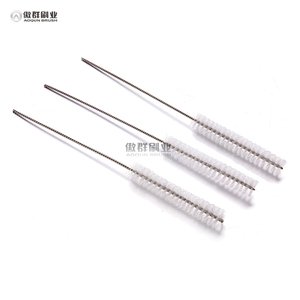
Fistula Brush for Surgical Purposes Tracheostomy Tube Brush Medical Tube Cleaning Brush
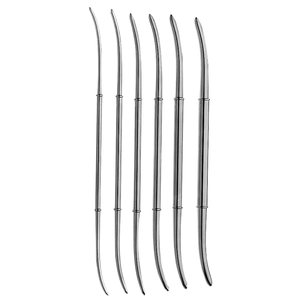
Ruya Surgical Hank Uterine Dilators Manual Double Ended Set 6 Dilators German Stainless Steel CE Approved Class I General 1 Year
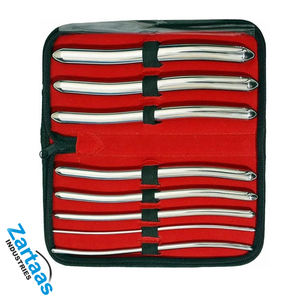
Hegar Sounds Double-Ended Set 8 Urinary/Uterine/Urethral Dilators Stainless Steel Sizes 3-4 17-18mm 20cm Convenient Pouch CE
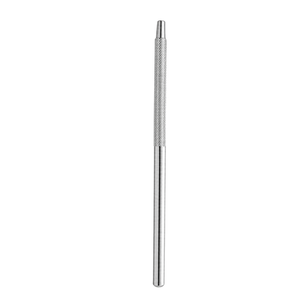
ARISTON INTERNATIONAL Non Magnetic Manual Dental Mirror Handle Stainless Steel Mouth Mirror Holder CE Certified Class Instrument
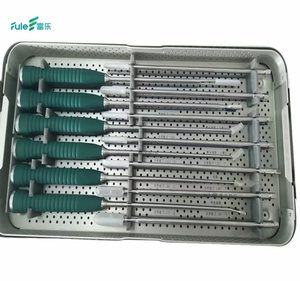
OLIF Stainless Steel Material Instrument From Beijing Fule Orthopedic Medical Instruments Surgical Tools Surgical Tools
Sourcing Custom OEM Tungsten Carbide Surgical Scissors for the Austrian Healthcare Landscape
Understanding the rigorous technical demands, regulatory frameworks (EU MDR 2017/745), and specialized micro-cutting preferences across Vienna, Graz, Innsbruck, Linz, and Salzburg.
Austrian Clinical Sourcing Standards & Regulatory Alignment
The Austrian healthcare sector—driven by state hospital groups such as Wiener Gesundheitsverbund (Vienna Health Center), KAGes (Steiermärkische Krankenanstaltengesellschaft in Styria), and tirol kliniken—operates under some of the stringent surgical procurement guidelines in the European Union. Procurement officers and medical device distributors in Austria demand surgical instruments that not only carry the mandatory CE mark under Regulation (EU) 2017/745 (MDR) but also demonstrate superior structural longevity under high-frequency Central Sterile Supply Department (CSSD / AEMP) reprocessing cycles.
Tungsten Carbide (TC) surgical scissors—known locally in German-speaking medical markets as Wolframkarbid-Scheren or Hartmetall-Scheren—represent the gold standard for trauma, cardiovascular, neurosurgical, and plastic reconstructive procedures across Austria. By seamlessly vacuum-brazing high-density tungsten carbide inserts (YG8/YG6 surgical grade) onto German-grade stainless steel shanks, Suddle Group delivers an instrument that retains its ultra-sharp razor edge up to 30 times longer than standard AISI 420 martensitic steel scissors.
"For Austrian surgical tenders, edge retention, corrosion resistance during automated thermal disinfection (AEMP), and zero-glare matte finishes are non-negotiable prerequisites."
Why Austria's Medical Suppliers Partner with Suddle Group
As an OEM/ODM direct factory partner established in 1976 with 1,500+ skilled artisans, Suddle Group provides Austrian distributors and private label medical brands direct access to precision manufacturing. We bridge the gap between traditional Sialkot forging craftsmanship and strict Central European engineering specifications (DIN EN ISO 13485).
-
✓ Gold-Plated Handles (RAL 1036)
✓ Supercut Micro-Serrations
✓ UDI / GS1 Laser Etching
✓ DIN 1.4116 Stainless Steel
✓ Autoclave Tested to 134°C
Engineering Superiority: Wolframkarbid Insert Technology
An in-depth technical analysis of tungsten carbide sintering, silver-brazing bonding strength, and Rockwell hardness differentials in professional surgical cutting tools.
Rockwell Hardness Differential (HRC 70 vs 54)
Standard surgical scissors forged from AISI 420 (1.4021) stainless steel achieve a tip hardness of HRC 52–54. Suddle Group’s OEM TC scissors integrate vacuum-sintered Wolframkarbid inserts boasting a hardness of HRC 68–72. This massive hardness differential prevents blade dulling, tissue pushing, and burr formation even after thousands of incision cuts through dense fascia, cartilage, and suture wire.
Advanced Vacuum Silver-Brazing
The primary failure point in low-grade TC scissors is insert delamination caused by thermal stress during autoclaving. Suddle Group utilizes high-frequency induction silver-brazing in a vacuum environment. This creates a molecular-level joint seal that completely eliminates micro-voids, preventing blood accumulation, crevice corrosion, and mechanical insert separation during automated washer-disinfector cycles.
Supercut & Micro-Serrated Blade Configurations
For plastic surgery and vascular microsurgery units in Graz and Innsbruck, we manufacture customized TC scissors with a dual-edge innovation: one blade features a razor-sharp knife edge for smooth tissue shearing, while the opposing blade incorporates microscopic precision serrations (50 teeth/cm) to grip slippery anatomical structures without slipping.
Tailored Applications in Austrian Medical Specialization Centers
Customizing OEM surgical scissors to meet the explicit ergonomic and mechanical demands of specialized surgical departments across Austrian state and private clinic networks.
1. Cardiovascular & Vascular Surgery (AKH Wien & General Hospitals)
In high-stakes cardiovascular surgery units at Vienna’s AKH (Allgemeines Krankenhaus), surgeons require micro-iris TC scissors and Potts-Smith TC scissors with curved 45° and 60° tips. Suddle Group manufactures custom ultra-thin TC blades (0.8mm blade tip width) that allow precise arteriotomy incisions without tearing fragile vessel walls. Gold-plated finger rings provide instant visual identification in the operating theater, adhering to international hospital safety standards.
2. Orthopedics, Trauma & Joint Reconstruction (Graz & Linz Clinics)
Austrian orthopedic centers specializing in sports trauma and joint replacement demand heavy-duty TC Mayo scissors and TC Sims dissecting scissors capable of cutting tough tendons, fascia lata, and heavy surgical drapes. Our German 1.4116 martensitic stainless steel shanks provide optimal elasticity, absorbing torsional flex while the tungsten carbide cutting edge delivers effortless cutting power.
3. Plastic, Aesthetic & Reconstructive Surgery (Innsbruck & Salzburg)
Reconstructive microsurgeons in Tyrol and Salzburg rely on TC Stevens Tenotomy scissors and TC Iris scissors with delicate straight or curved tips. Suddle Group offers custom matte satin (E-polishing) surface treatments that eliminate high-intensity operating lamp glare under surgical microscopes, paired with micro-adjust screw joints for custom friction tuning.
4. Sterilization & Reprocessing Compliance (AEMP / CSSD Protocols)
Austrian healthcare facilities operate under ÖNORM EN ISO 17664 guidelines for reprocessing reusable medical devices. Suddle Group TC surgical scissors undergo passivation according to ASTM F983 standards, guaranteeing resistance against pitting corrosion and rust formation during automated alkaline washing (pH > 10) and steam autoclaving at 134°C (273°F) for 18 minutes.
Suddle Group OEM TC Scissors vs. Industry Standards
A comparative engineering evaluation showing why leading European distributors choose our OEM manufacturing capabilities over standard market alternatives.
| Engineering Parameter | Suddle Group Custom OEM TC Scissors | Standard AISI 420 Steel Scissors | Low-Cost Import Substitutes |
|---|---|---|---|
| Insert Material Grade | Sintered YG8 / YG6 Wolframkarbid | No Insert (Solid Stainless Steel) | Recycled Low-Grade Carbide Insert |
| Blade Tip Hardness | HRC 68 – 72 (Vickers ~1500 HV) | HRC 52 – 54 (Vickers ~550 HV) | HRC 58 – 62 (Inconsistent) |
| Brazing Technology | Vacuum Induction Silver-Brazing | N/A (Monolithic Steel) | Standard Torch Soldering (Porous Joint) |
| Shank Material | German Martensitic 1.4116 / 420B | Standard 410 / 420 Steel | Low-Carbon 300 Series / Soft Steel |
| Autoclave Lifecycle (134°C) | 2,500+ Reprocessing Cycles | 300–500 Reprocessing Cycles | <100 Cycles (Risk of Delamination) |
| Regulatory Compliance | EU MDR 2017/745, CE, ISO 13485 | Varies / Often Incomplete CE File | Non-Compliant / Missing UDI Track |
| Private Label Branding | Laser UDI, GS1 DataMatrix, Custom Logo | Basic Stamp Only | No Custom Marking Available |
Full-Service OEM / ODM Manufacturing for Austrian Brands
From technical blueprint drafting and 3D CAD modeling to batch forging, gold-plating, and customized sterile packaging assembly.
1. Custom Engineering & CAD Prototyping
We work directly from customer technical drawings, physical sample duplicates, or DIN catalogue codes. Our engineering team in Sialkot produces 3D CAD models and prototype samples within 10–14 days for customer review and trial evaluation.
2. Precision Die Forging & CNC Milling
Using high-tonnage drop forging dies and 5-axis CNC machining centers, we shape instrument shanks with micron-level consistency. Box locks, screw joints, and finger rings are machined to exact ergonomic tolerances.
3. Private Labeling & Packaging Compliance
We provide high-precision fiber laser marking for customer logos, part numbers, lot numbers, and GS1 DataMatrix UDI codes (Unique Device Identification) required for EU MDR market compliance across Austria and the EU.
Suddle Group of Industries: Half a Century of Master Metalwork
For over five decades, Suddle Group has stood as a premier manufacturer and global exporter of high-precision surgical and dental instruments. Based in Sialkot, Pakistan—the worldwide capital of surgical hand instrument forging—our vertically integrated production facility spans forging, heat treatment, hand grinding, electro-polishing, and cleanroom assembly.
With a dedicated workforce of over 1,500 skilled craftsmen and a product catalog exceeding 2,000 surgical patterns, we supply medical device brands, hospital systems, and tenders in more than 30 countries across Europe, North America, and the Middle East.
Quality System Certifications
- ISO 13485:2016 — Medical Devices Quality Management
- EU MDR (EU 2017/745) — CE Class I Reusable Surgical Tools
- FDA Registered Facility — Owner / Operator No. 10058492
- ISO 9001:2015 — Total Quality Management Certification
Frequently Asked Questions for Austrian Sourcing Managers
Addressing regulatory compliance, shipping logistics, customs, and OEM specifications for medical device procurement in Austria.
Q: How do your TC surgical scissors comply with EU MDR 2017/745 for entry into Austria?
All our reusable surgical instruments carry CE marking and are supported by complete Technical Documentation files according to EU MDR 2017/745 requirements for Class I reusable surgical devices. We provide Declarations of Conformity, UDI-DI assignment, material inspection certificates (DIN 10204 3.1), and reprocessing guidelines per ISO 17664 for seamless registration in the Austrian EUDAMED database.
Q: What is the typical Minimum Order Quantity (MOQ) for custom OEM TC scissors?
For standard catalog Tungsten Carbide scissors (such as Metzenbaum TC, Mayo TC, and Iris TC), our MOQ starts at 50 pieces per pattern. For completely custom OEM designs requiring specific tip curvatures, non-standard lengths, or unique handle plating, MOQs typically range between 100 to 200 pieces.
Q: Can Suddle Group laser-etch our proprietary Austrian brand logo and GS1 UDI codes?
Yes. We offer high-resolution fiber laser marking directly on the instrument shank or box lock. We can engrave your company logo, article catalog numbers, batch numbers, CE marks, and GS1-compliant 2D DataMatrix UDI barcodes for automated inventory scanning in Austrian hospital networks.
Q: How do you ensure corrosion resistance during Austrian AEMP thermal sterilization?
Our TC scissors undergo a multi-stage automated passivation treatment in accordance with ASTM F983 standards. This process removes surface free iron and forms a stable chromium-oxide passive film. Instruments are tested against copper sulfate immersion tests and boil tests to guarantee rust-free performance under repeated 134°C steam sterilization.
Q: What are the lead times and delivery logistics for shipments to Austria (Vienna, Linz, Graz)?
Production lead times for catalogue TC scissors are typically 3 to 4 weeks. Custom OEM orders require 4 to 6 weeks depending on batch volume. We arrange direct door-to-door express air freight (DHL/FedEx, 4–6 business days) or consolidated air cargo landing at Vienna International Airport (VIE), complete with EUR.1 movement certificates and custom export documentation.
Q: Are material test certificates provided with bulk shipments?
Yes. Every batch dispatch includes Material Test Certificates verifying chemical composition (Carbon, Chromium, Manganese) of the stainless steel shanks as well as hardness test verification reports for both the steel body and the tungsten carbide blade inserts.
Partner with a Direct OEM Tungsten Carbide Scissors Factory
Whether you are an established Austrian medical distributor expanding your private label catalog or a surgical purchasing manager seeking direct-from-factory pricing and uncompromised quality, Suddle Group is ready to deliver.