Featured Ophthalmic & Surgical Instrumentation
Direct factory-grade micro-surgical tools manufactured to German DIN metallurgical standards, supplied in bulk to Mumbai medical device importers, government hospital procurement committees, and private surgical centers.
Navigating the Mumbai Ophthalmic Instrument Market: Factory Sourcing & Quality Calibration
Mumbai stands as the financial capital and medical apex of India, housing world-renowned ophthalmic clinical networks, super-specialty eye institutes, and healthcare infrastructure ranging from private ophthalmic surgical suites in South Mumbai to massive municipal tertiary hospitals like KEM, Nair, and Sion Hospital. With Maharashtra’s rapid expansion of refractive surgery centers, micro-incisional cataract surgery (MICS), vitreoretinal procedures, and oculoplastic interventions, the localized demand for ultra-precision micro-surgical instrumentation—specifically Ophthalmic Iris Scissors—has reached unprecedented heights.
However, procurement managers, medical device stocking distributors in Dadar, Kalbadevi, and Princess Street, and hospital purchasing boards face a continuous challenge: balancing cost efficiency with uncompromising micro-edge sharpness, tip alignment, and corrosion resistance. In micro-ophthalmic procedures, an iris scissor is not merely a cutting tool; it is an extension of the surgeon’s micro-tactile sensitivity. A misalignment of even 5 microns or a micro-burr on the blade tip can cause tearing of delicate iris tissue, ragged capsulorhexis margins, or trauma to conjunctival flaps.
Information Gain Insight: Modern anterior segment surgeons in Mumbai are increasingly shifting from disposable single-use plastic-handled scissors back to high-grade, reusable German martensitic steel Iris Scissors equipped with Tungsten Carbide (TC) inserts or Black-Finished Super-Cut micro-serrations. Reusable micro-instruments manufactured by dedicated OEM factories deliver superior tactile feedback, reduce long-term hospital operational expenditure by up to 64%, and decrease bio-hazardous medical waste.
Anatomy & Metallurgical Standards of Professional Iris Scissors
Ophthalmic iris scissors are engineered specifically for intraocular and extraocular tissue dissection. Featuring extremely short, razor-sharp blades paired with fine ring handles or spring action limbs, these instruments allow fine control in tight anatomical quarters such as the anterior chamber or subconjunctival spaces. To meet the stringent demands of Mumbai’s high-volume ophthalmic operating theatres, instruments must strictly comply with international metallurgical standards:
AISI 420/440 Martensitic Steel
High-carbon martensitic stainless steel heat-treated to Rockwell Hardness HRC 54–58. Provides exceptional edge retention, preventing blade blunting during repeated tissue snips and micro-suturing operations.
Micro-Serration Technology
One blade edge features sub-millimeter laser-etched micro-serrations that hold smooth, slippery ocular tissue in place, preventing tissue slippage during delicate iridectomy or tenotomy cuts.
Electropolished Passivation
Full compliance with ASTM A967/F899 passivation standards. Nitric and citric chemical baths create an impenetrable chromium oxide passive layer resistant to saline corrosion and harsh autoclave cycles.
Engineering Specification Matrix: Iris Scissors vs Standard Surgical Scissors
When sourcing for Mumbai medical tenders or hospital inventories, procurement managers must differentiate standard general surgery scissors from micro-ophthalmic specifications:
| Specification Feature | Standard Iris Scissors (Ring Handle) | Vannas / Micro-Iris Scissors (Spring Action) | Super-Cut / TC Ophthalmic Scissors |
|---|---|---|---|
| Primary Application | Iridectomy, conjunctival dissection, suture cutting | Capsulorhexis incision, trabeculectomy, delicate iris tissue | High-durability corneal/tenotomy tissue trimming |
| Overall Length (OAL) | 90 mm – 115 mm (3.5" to 4.5") | 80 mm – 85 mm (3.15") | 100 mm – 115 mm (4.0" to 4.5") |
| Blade Tip Geometries | Straight / Curved (Sharp/Sharp or Sharp/Blunt) | Ultra-fine curved/straight sharp tips (0.1mm blade width) | Beveled micro-razor edge with gold ring handles |
| Material Composition | German AISI 420 Stainless Steel | German AISI 440 Steel / Titanium Alloy | AISI 420 with Sintered Tungsten Carbide Inserts |
| Autoclave Life Cycle | 500+ Sterilization Cycles | 400+ Sterilization Cycles (Micro-handling required) | 1,200+ Sterilization Cycles |
| Mumbai Regulatory Status | CDSCO Class A/B Registered | CDSCO Class B Registered | CDSCO Class B Registered |
Localized Application Scenarios in Mumbai Operating Theatres
In Mumbai’s specialized eye hospitals, surgical workflows vary dramatically depending on the sub-specialty. Understanding localized usage patterns enables hospital procurement authorities and trade exporters to select the precise instrument profiles required:
1. Small Incision Cataract Surgery (SICS) & Phacoemulsification
Despite the surge in femtosecond laser-assisted surgery in premium Bandra and Breach Candy eye clinics, manual SICS and phacoemulsification remain the workhorses of charity eye camps and trust hospitals across Greater Mumbai (such as Dadar Lions Eye Hospital and Bachooali Eye Hospital). Curved 11.5cm Iris Scissors are used extensively to construct conjunctival flaps, perform precise limbal peritomy, and trim 10-0 nylon sutures without fraying.
2. Glaucoma Filtering Surgery & Trabeculectomy
Mumbai’s aging demographic has led to increased volume in glaucoma surgeries. Precise excision of the scleral flap and deep sclerectomy require ultra-sharp micro-curved Iris Scissors (or spring Vannas scissors). The blades must cut cleanly to the exact tip without pushing or bending the fibrous scleral tissue, ensuring consistent aqueous humor drainage channels.
3. Strabismus & Oculoplastic Reconstruction
Pediatric ophthalmic units and oculoplastic clinics in Navi Mumbai and Thane rely on Stevens Tenotomy and Iris Scissors for delicate extraocular muscle dissection, fascial trimming, and blepharoplasty skin flap shaping. The spring tension of the instrument handle must be calibrated perfectly to prevent surgeon hand fatigue during intricate 2-hour reconstructive procedures.
4. Veterinary Ophthalmology & Academic Research
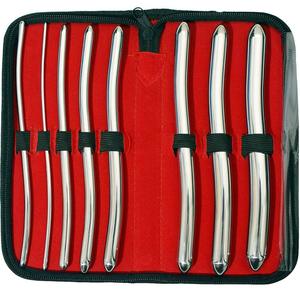
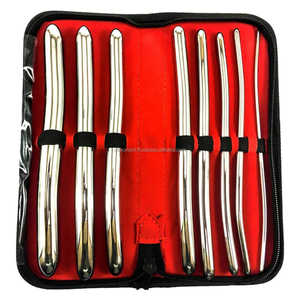
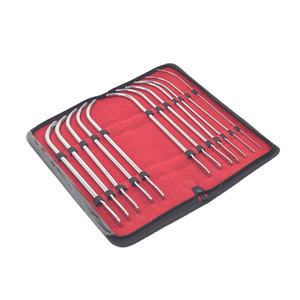
With the growth of specialized veterinary surgery centers in suburban Mumbai (such as Parel Veterinary Hospital), fine Iris Scissors and specialized dilator sets (like Hegar and Sims sounds) are frequently procured for veterinary microsurgery, corneal ulcer debridement, and reproductive research in university laboratories.
Five Decades of Manufacturing Excellence: Suddle Group Sialkot
Behind every high-performance surgical instrument lies a legacy of precision engineering. Founded in 1976 in Sialkot—the premier global cluster for hand-forged surgical instruments—Suddle Group of Industries has evolved from a specialized forging workshop into an international manufacturing powerhouse. Spanning over 1,500 skilled master craftsmen and producing a catalog of over 2,000 active instrument variations, Suddle Group controls the entire production ecosystem in-house.
Unlike trading intermediaries or third-party sourcing agents, Suddle Group manages every critical step under one audited roof: precision drop forging, multi-axis CNC machining, vacuum heat treatment, manual hand-fitting by master cutlers, ultrasonic cleaning, electropolishing, and 100% optical quality inspection. This vertical integration allows us to supply hospital chains, B2B importers, and tender contractors in over 30 countries—including the demanding Mumbai healthcare market—with consistent, traceable, and durable instrumentation.
Custom OEM & Private Label Production for Indian Brands
For medical equipment brands and distributors in India seeking to establish their own private-label lines of ophthalmic or general surgical instruments, Suddle Group provides complete OEM support:
- Precision Fiber-Laser Marking: Etch your brand logo, catalog numbers, lot numbers, and UDI (Unique Device Identification) barcode directly onto the instrument shank.
- Custom Blade & Surface Coatings: Select between satin anti-glare finish, mirror polish, titanium nitride (TiN) gold coating, or black ceramic non-reflective finishes.
- Flexible Ordering & Custom Kits: Pre-assembled ophthalmic OR sets, microsurgical cassette trays, and custom OB/GYN dilator sets packed according to your market's exact specs.
- Complete Quality Documentation: Every export consignment includes Certificates of Conformance, raw material mill test reports, and passivated corrosion resistance certificates.
Frequently Asked Questions for Mumbai Buyers & Importers
Clear answers regarding customs compliance, CDSCO licensing, minimum order quantities, and shipping logistics to Maharashtra ports.
What are the CDSCO regulatory requirements for importing Iris Scissors into Mumbai?
Under India's Medical Devices Rules (MDR 2017) enforced by the Central Drugs Standard Control Organization (CDSCO), reusable surgical instruments like Iris Scissors fall under Class A or Class B medical devices. Importers in Mumbai must hold a valid Import License (Form MD-15) obtained via the SUGAM portal. Suddle Group provides complete technical documentation, ISO 13485 certificates, and Declarations of Conformity to assist your local Indian Authorized Agent (IAA) with smooth registration.
What is the standard shipping lead time to Mumbai Air Cargo & JNPT Sea Port?
For standard catalog items, manufacturing and dispatch take approximately 2 to 4 weeks. Express air freight shipments via DHL, FedEx, or Emirates SkyCargo reach Mumbai Air Cargo Complex (BOM) within 3 to 5 business days. Sea freight shipments destined for Jawaharlal Nehru Port Trust (JNPT / Nhava Sheva) take approximately 14 to 21 days depending on shipping lines, making air freight the preferred choice for urgent surgical supply orders.
What is the Minimum Order Quantity (MOQ) for factory-direct orders?
Standard catalog items start from a flexible MOQ of 50 pieces per instrument pattern. For custom OEM designs, specialized titanium coatings, or private-label laser etching, typical MOQs range between 100 to 200 pieces. Volume-based price breaks are automatically applied for orders exceeding 500 pieces per line item.
How do Suddle Group Iris Scissors perform against European or German brands?
Suddle Group manufactures instruments using imported German martensitic stainless steel (AISI 420/440) conforming to DIN EN ISO standards. Our micro-scissors match German cutting performance, alignment tolerances, and corrosion resistance at a fraction of the cost—delivering superior ROI for hospital purchasing managers and competitive pricing margins for local trade distributors.
Are samples available for clinical evaluation by Mumbai hospital surgeons?
Yes, we routinely supply pre-production evaluation samples to hospital procurement boards, surgical department heads, and stocking distributors across Mumbai, Pune, and Nagpur. Evaluation samples allow surgeons to test blade sharpness, spring tension, and ergonomic balance in their operating environment prior to placing bulk contracts.
Request Product Catalogs & Wholesale Pricing
Connect directly with Suddle Group's export team to receive our complete Ophthalmic & Surgical Instrumentation Catalog, OEM specifications, and direct factory price lists for the Mumbai market.
Get Catalog